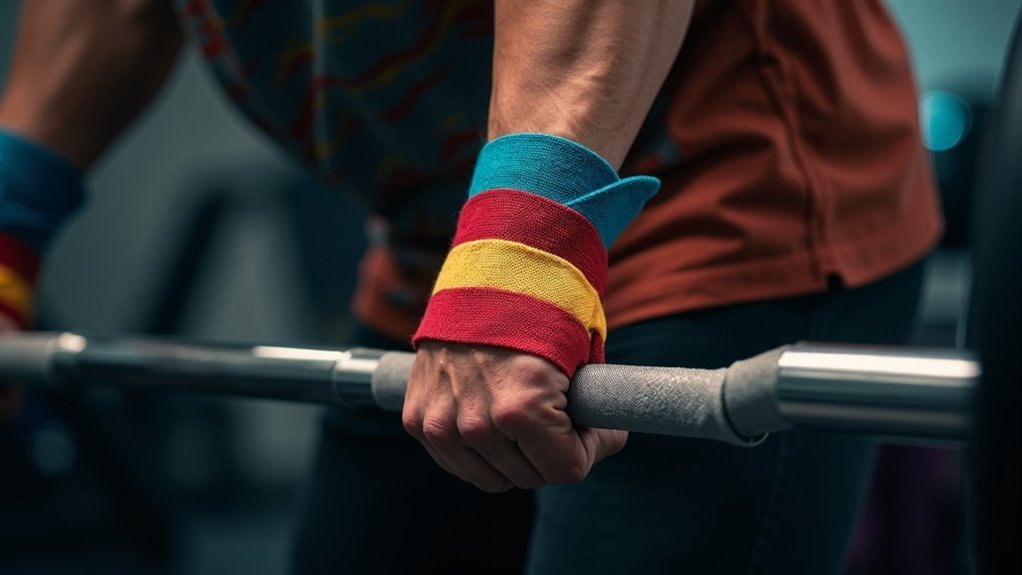
To use wrist wraps for pressing during your home workouts, begin by wrapping them securely at the base of your hand, ensuring they cover the wrist joint effectively. The wraps should be snug enough to provide support but not so tight that they restrict circulation. Maintain a straight wrist position to prevent extension during your lifts. For optimal support, consider wraps that are around 24 inches long. Utilize the thumb loop for added stability, which helps ensure a secure fit throughout your exercise routine. If you’re interested in learning more about selecting the right wrist wraps and tips for enhancing your performance at home, keep reading!
Key Takeaways
- Wrap the wrist at the base of the hand to provide support during pressing exercises, helping to enhance your home workout experience.
- Ensure the wraps are snug enough to offer support but not so tight that they impede circulation.
- Maintain a straight wrist position to avoid any unnecessary extension during your pressing movements, which is crucial for effective and safe home training.
- Opt for wraps that are 20-24 inches long for the best combination of support and flexibility, especially when tackling heavier lifts in your home gym.
- Utilize the thumb loop to secure the wrap and ensure proper wrist alignment, promoting better form and reducing the risk of injury.
Benefits of Wearing Wrist Wraps for Pressing
When you’re pushing your limits with pressing exercises at home, wearing wrist wraps can make a significant difference in your performance.
These wraps provide essential support, helping alleviate wrist pain and ensuring stability during strength training sessions. With improved grip strength, you can lift more weight and delay forearm fatigue, making those heavy lifts feel more manageable in your home gym setup.
Additionally, wrist wraps can enhance your confidence, allowing you to maintain proper wrist positioning and technique. If you’re aiming to boost your one-rep max or increase muscle growth from the comfort of your home, incorporating wrist wraps into your routine is a smart move to safely push your limits and maximize your gains.
Who Should and Should Not Use Wrist Wraps
Wrist wraps can be a game-changer for many home gym enthusiasts, but they’re not for everyone. If you have wrist joint stability issues or experience pain without injury, using wrist wraps can provide essential support during pressing movements, making your home workouts more effective.
Powerlifters aiming to lift maximal loads will also benefit from wearing wraps to enhance their technique. Additionally, those focused on muscle growth can delay forearm fatigue during higher rep sets, allowing for more productive sessions at home.
However, beginners should focus on mastering proper technique without wraps first to build a solid foundation. Functional strength trainers may find wearing wraps counterproductive as they prioritize forearm muscle development, which is crucial for overall fitness.
Assess your goals and workout style to determine if wrist wraps are the right addition to your home gym routine.
Tips for Wearing Wrist Wraps Correctly
To maximize the benefits of your wrist wraps while exercising at home, begin by wrapping them at the base of your hand, ensuring that the material adequately covers the wrist joint without cutting off circulation.
It’s important to wrap tightly enough to offer support, but not so tight that it restricts blood flow. Aim to maintain a straight wrist position to prevent wrist extension during pressing movements, which can lead to injury.
For optimal support and flexibility, use wrist wraps that are around 24 inches in length. Remember to utilize the thumb loop; aligning it correctly will provide a secure fit.
As you progress in your home workouts, gradually increase the weights you lift to monitor your comfort and the effectiveness of the wraps.
Stay healthy and safe while achieving your fitness goals!
Wrist Wraps: Buyer’s Guide
Finding the right wrist wraps can significantly enhance your home workout experience, particularly when you’re challenging yourself with heavier lifts. Consider the length, flexibility, and support they offer. Here’s a quick guide to help you choose:
| Length | Flexibility | Support Level |
|---|---|---|
| 18 inches | High | Moderate |
| 20-24 inches | Moderate to High | Maximum |
| Adjustable | Flexible | Adequate |
Look for wraps with a thumb hole for optimal wrist alignment, and take the time to research brands to ensure you’re getting quality products. The right wrist wraps will elevate your performance and support your unique lifting style as you work towards your fitness goals at home.
Best Wrist Wrap Options for Pressing
Choosing the right wrist wraps can greatly enhance your home workout experience, especially when pressing heavy weights.
To ensure you have the best support and stability, consider these options:
- Stiff Wrist Wraps: Perfect for those who require strong support to maintain proper wrist alignment during pressing exercises. They’re especially beneficial for home gym enthusiasts looking to push their limits safely.
- Flexible Wraps: Ideal for comfort and ease of adjustment, these wraps provide effective support without feeling overly restrictive, making them a great choice for varied home workouts.
- Thumb Loop Design: Opt for wraps that feature a thumb loop. This design element helps keep the wraps securely in place, ensuring consistent support throughout your lifts.
Brands like Inzer and A7 are highly recommended for their durability and performance, making them excellent choices for anyone looking to enhance their home gym experience while prioritizing safety and effective pressing techniques.