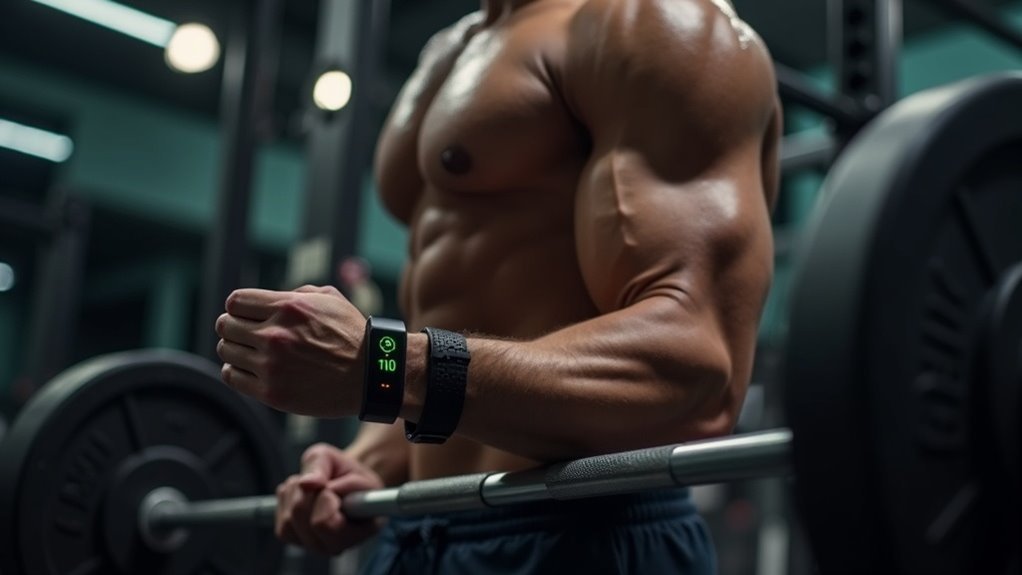
To use arm bands for heart rate while lifting at home, start by wearing the device snugly on your upper arm to ensure proper contact for accurate readings. Adjust the fit for comfort, and position it higher on your arm to improve sensor detection. Minimize arm movement during your lifts to maintain consistent data. After each set, monitor your recovery heart rate to evaluate your cardiovascular fitness. Stick around for more tips and insights that can help you optimize your home workouts and achieve your fitness goals!
Key Takeaways
- Wear the armband snugly on the upper forearm or upper arm for optimal sensor contact and accurate heart rate readings, crucial for effective home workouts.
- Adjust the fit for comfort while ensuring the device stays securely in place, preventing slips during your lifting sessions.
- Position the armband higher on the arm to enhance detection and minimize discrepancies in readings, ensuring accurate feedback while you work out at home.
- Minimize arm movement while lifting to ensure consistent heart rate data throughout your exercise session, helping you stay in tune with your fitness goals.
- Monitor your heart rate to identify target zones and adjust your workout intensity based on the feedback received, maximizing the effectiveness of your home gym routine.
Benefits of Using Arm Bands for Heart Rate Monitoring
When you’re pushing your limits during a workout at home, comfort and accuracy are essential, and that’s where arm bands for heart rate monitoring excel.
These heart rate monitors provide a comfortable fit, allowing you to concentrate on your fitness goals without distractions. With continuous heart rate tracking, you can maintain your target heart rate zones during your lifting sessions for optimal performance right in your home gym.
The flexibility in placement enhances sensor contact, ensuring reliable readings. Unlike wrist-based monitors, arm bands resist interference from arm movement, delivering accurate data in real-time.
This allows you to adjust your intensity levels effectively, maximizing your workout efficiency and helping you achieve your health and fitness objectives from the comfort of your home.
Proper Placement for Accurate Readings
To achieve the most accurate heart rate readings while exercising at home, place your armband on the upper forearm or upper arm.
This positioning allows the sensors to make optimal contact for precise measurements. Ensure the fit is snug but not overly tight to prevent any restriction of blood flow.
For added stability during your workouts, consider using athletic tape to reduce movement, helping you stay focused on your fitness goals.
Optimal Arm Positioning
Achieving accurate heart rate readings with your arm band is crucial for optimizing your home workouts. For the best results, position the arm band on your upper forearm or upper arm rather than your wrist. This ensures optimal sensor contact, helping you monitor your heart rate effectively during your fitness routine.
Make sure the fit is snug yet comfortable to prevent inaccuracies that can arise from looseness or restricted blood flow. Placing the device higher on your arm, closer to the bicep, can further enhance detection and minimize discrepancies in readings. Additionally, reducing arm movement during lifting exercises will help maintain consistent heart rate data.
For those intense workout sessions, consider using athletic tape to secure the arm band in place, ensuring it stays put while you push yourself.
| Positioning Tip | Benefit |
|---|---|
| Upper forearm | Optimal sensor contact |
| Higher on the arm | Accurate readings |
| Snug fit | Prevents inaccuracies |
| Minimized arm movement | Consistent data |
| Athletic tape use | Maintains proper placement |
Secure Fit Techniques
While securing your armband properly is essential for accurate heart rate readings, it’s equally important to understand the techniques that will keep it in place during your home workouts.
- Place the armband on your upper forearm or upper arm for optimal sensor contact, ensuring it can accurately track your heart rate.
- Tighten the strap snugly, making sure it’s secure without restricting blood flow—this will help you maintain comfort while exercising at home.
- If you experience slippage during intense lifting sessions, consider using athletic tape for added security, allowing you to focus on your workout without distractions.
Tips for Improving Accuracy During Workouts
To achieve the most accurate heart rate readings during your home workouts, concentrate on three essential factors: strap tightness, optimal device placement, and minimizing arm movement.
Ensure that your armband fits snugly without cutting off blood circulation, and position it higher on your arm for improved sensor contact.
Additionally, try to keep your arm as still as possible to maintain consistent contact, which will enhance the reliability of your data.
This way, whether you’re using a treadmill, resistance bands, or any other home gym equipment, you’ll be able to monitor your heart rate effectively and stay on track with your fitness goals.
Strap Tightness Adjustment
Proper strap tightness is essential for achieving accurate heart rate readings with your arm band during home workouts. A snug fit ensures stability while allowing for proper circulation.
Here are some tips for ideal strap tightness adjustment to enhance your home gym experience:
- Wear the arm band higher on your forearm to improve sensor contact during exercises.
- Use athletic tape to secure the device and minimize unwanted movement while working out.
- Keep your arm movements steady during lifts to enhance accuracy and get the most out of your home fitness routine.
Optimal Device Placement
Getting the ideal placement of your armband is crucial for accurate heart rate monitoring during your home workouts. For optimal sensor contact, position the armband on your upper forearm or upper arm. A snug fit is essential to prevent movement while ensuring comfort, allowing you to focus on your exercise routine. Don’t hesitate to experiment with a higher placement, as it may provide improved accuracy during your sessions.
| Placement Area | Benefits |
|---|---|
| Upper Forearm | Better skin contact |
| Upper Arm | Enhanced sensor accuracy |
| Snug Fit | Prevents slippage |
| Higher Position | Improved reading reliability |
| Athletic Tape Use | Secures device for accuracy |
Maximize your heart rate tracking with these strategies and enhance your home workout experience!
Minimize Arm Movement
While you might be tempted to push your limits with dynamic movements during your home workouts, minimizing arm movement is key to achieving accurate heart rate readings with your armband.
Here are some tips to help you maintain precision:
- Position the armband snugly on your upper forearm for ideal sensor contact.
- Engage in slower, controlled movements to allow the heart rate monitor’s sensor to adjust accurately.
- Tighten the armband carefully to prevent inaccuracies without restricting blood flow.
Comparing Arm Bands to Other Heart Rate Monitors
When selecting a heart rate monitor for your home workouts, it’s important to consider the differences between arm bands and other options like chest straps.
Arm bands provide a comfortable and convenient solution, making them great for at-home exercise routines. However, their accuracy may decrease during high-intensity activities, such as circuit training or heavy lifting.
In contrast, chest straps offer exceptional precision, boasting an impressive 99.6% accuracy through ECG measurement. While arm bands mightn’t reflect your true heart rate during intense training sessions, chest straps consistently provide dependable data.
Chest straps deliver unmatched precision with 99.6% accuracy, ensuring reliable heart rate monitoring during intense workouts.
For those serious about optimizing their home workouts and effectively monitoring heart rate fluctuations, choosing a chest strap is the smart choice for achieving peak performance.
Common Challenges and How to Overcome Them
Choosing an arm band for heart rate monitoring can present some challenges during your home workouts. To ensure you achieve accurate heart rate readings, consider these helpful tips:
- Wear the arm band snugly on your upper forearm to minimize movement while you exercise at home.
- Position the band higher on your arm for improved sensor contact to get the best readings.
- Keep electronic devices at least 10 centimeters away to minimize distractions and maintain your focus.
Remember that arm bands may have a lag time of up to 60 seconds, so be patient during intense lifting sessions.
With the right adjustments, you can enhance your arm band’s performance and stay dedicated to your fitness goals in the comfort of your own home.
Integrating Heart Rate Data Into Your Training Routine
Integrating heart rate data into your home training routine can significantly enhance your performance and overall fitness.
Make sure to wear your armband snugly on your upper forearm for accurate readings. While performing exercises with your home gym equipment, monitor your heart rate to identify your target heart rate, which helps you optimize strength gains without overexertion.
After each set, check your recovery heart rate to see how quickly you return to your baseline; this is a key indicator of your cardiovascular fitness. Adjust your routine based on this feedback, allowing for adequate recovery time, especially if your heart rate spikes.
This method ensures you’re training effectively at home while minimizing the risk of fatigue or overtraining, helping both men and women achieve their fitness goals.