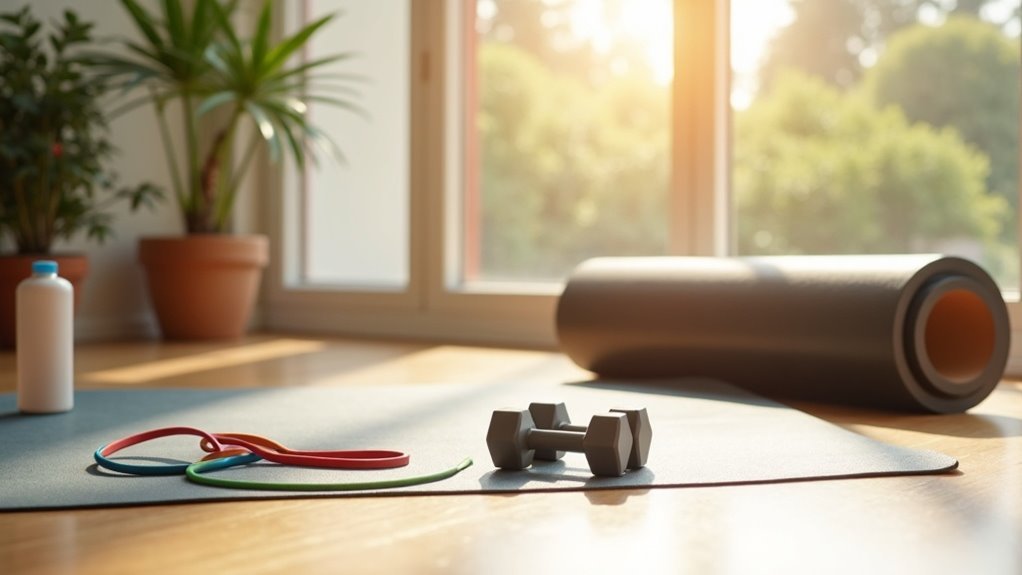
When you’re managing a minor injury, it’s crucial to adapt your home workout routine to support healing while staying active. Opt for low-impact exercises and gentle isometric movements that allow you to engage unaffected areas without putting too much strain on the injury. Always pay attention to your body—if you feel increased pain, modify your activities accordingly. Focus on flexibility and mobility exercises to aid recovery, using equipment like resistance bands or stability balls that can enhance your home workouts. Don’t hesitate to reach out to a medical professional for tailored advice. By understanding and applying these strategies, you can effectively navigate your training around injuries while ensuring a safe recovery, all from the comfort of your home gym.
Key Takeaways
- Consult a medical professional for an accurate diagnosis and tailored exercise recommendations to ensure safe training around injuries, especially when using home gym equipment.
- Focus on low-impact exercises and isometric movements to engage muscles effectively without aggravating the injury, making use of your home gym setup.
- Gradually reintegrate movements, starting with low-range motion exercises, and keep an eye on your pain levels to prevent setbacks during your home workouts.
- Utilize gentle cardio options available at home, like stationary bikes or water rowers, to maintain cardiovascular fitness without straining the injury.
- Listen to your body and adjust your workout intensity based on pain levels, prioritizing recovery to ensure a safe return to your regular home exercise routine.
Understanding Minor Injuries and Their Impact on Training
When you experience a minor injury while working out at home, it’s crucial to recognize how it can impact your training routine. Minor injuries like strains and sprains may cause temporary pain but typically don’t lead to long-term issues.
Applying first aid can help reduce swelling and promote blood flow, which aids in recovery. Engaging in low-impact home exercises can help you maintain your fitness levels while allowing the injured area to heal and preserving your range of motion.
Applying first aid and engaging in low-impact exercises can aid recovery while maintaining fitness and preserving mobility.
Consulting a physical therapist can provide you with personalized strategies to modify your home workouts, ensuring you stay active without worsening your condition.
Effectively managing minor injuries minimizes their impact on your overall performance and helps you stay on track with your fitness goals from the comfort of your home gym.
Importance of Consulting a Medical Professional
Consulting a medical professional is crucial for maintaining your safety and optimizing your performance while training at home, especially if you are dealing with minor injuries. A licensed expert can accurately assess any injuries, helping you avoid further complications. They will provide evidence-based advice on suitable modifications and rehabilitation exercises specifically designed for your home workout routine. This tailored recovery plan not only aids in healing but also improves your overall fitness performance. Regular check-ins with your healthcare provider allow for continuous evaluation and necessary adjustments to your home training regimen, ensuring a well-rounded approach to your health and fitness goals.
| Benefits of Consulting | Medical Professional Role | Recovery Focus |
|---|---|---|
| Accurate Diagnosis | Identify injury nature | Personalized Plan |
| Tailored Exercise | Recommend modifications | Monitor Progress |
| Evidence-based Advice | Guide rehabilitation | Minimize Re-injury |
Modifying Your Workout Routine After an Injury
After an injury, it’s crucial to focus on home workout alternatives that won’t worsen your condition.
Prioritizing recovery and rest is essential for healing, so consider low-impact exercises that can be performed with home gym equipment while gradually reintegrating movements as you feel ready.
This approach not only helps maintain your fitness levels but also supports your overall recovery process, allowing you to stay active and healthy within the comfort of your home.
Focus on Alternative Activities
Injuries can be frustrating, but modifying your home workout routine to focus on alternative activities is essential for maintaining your fitness level while you heal.
If you have a lower body injury, concentrate on upper body workouts that can be performed with home gym equipment, such as resistance bands or dumbbells. Incorporate low-impact exercises like swimming (if you have access to a pool) or cycling on a stationary bike to maintain cardiovascular fitness without stressing the injured area.
Isometric exercises can help you engage muscles without joint movement, preserving strength safely. Adjust the intensity and range of motion for unaffected areas, and include flexibility and mobility work with tools like foam rollers or yoga mats to support overall fitness and recovery.
These adjustments will help you stay active at home while prioritizing your healing process.
Prioritize Recovery and Rest
While your body works to heal, prioritizing recovery and rest is essential for effective rehabilitation, especially when exercising at home. Start by resting the injured area for at least 1 to 2 days, allowing your body to initiate recovery. Modify your home workout routine with low-impact exercises, and focus on gentle isometric movements to preserve strength without putting undue strain on your body. Elevate the injured limb to reduce swelling, and adjust your training intensity based on your pain levels to ensure a safe recovery.
| Action | Purpose |
|---|---|
| Rest for 1-2 days | Initiate healing process |
| Low-impact exercises | Maintain activity without strain |
| Isometric exercises | Preserve strength, prevent stiffness |
| Elevate limb | Reduce swelling |
| Adjust intensity | Avoid aggravating the injury |
Gradual Reintegration of Movements
To promote healing effectively and maintain your fitness at home, it’s crucial to gradually reintegrate movements into your workout routine after an injury.
Begin with low-range motion exercises using your home gym equipment to avoid aggravating the injured muscle while encouraging recovery. The first step involves submaximal isometric exercises, gently contracting the injured area to maintain strength without causing further damage.
Utilize ice or heat to reduce swelling and keep a close watch on your pain levels; if you experience sharp pain, stop immediately.
Incorporate alternative exercises that target the same muscle groups, allowing you to stay active without straining the injured soft tissue.
Progress slowly, increasing intensity as comfort levels improve, ensuring that you gradually build back your strength in the comfort of your own home.
Pain-Free Exercises to Incorporate
When managing a minor injury, incorporating isometric strengthening exercises with home gym equipment can help maintain muscle strength without causing additional pain.
Consider low-impact cardio options, such as using an exercise bike or elliptical machine, to keep your cardiovascular fitness intact while minimizing strain.
Isometric Strengthening Exercises
Incorporating isometric strengthening exercises into your home workout routine can be an effective way to maintain muscle strength while you recover from an injury. These pain-free exercises involve contracting the muscles in your injured limb without moving the joint, which can help alleviate pain and enhance your recovery process. Research indicates that isometric exercises promote blood flow and prevent stiffness, making them a great addition to your at-home fitness regimen. Always aim to hold each contraction for 10 to 30 seconds, and be sure to stop immediately if you experience any sharp pain. Here are some examples of isometric exercises you can do at home:
| Exercise | Target Muscle | Duration |
|---|---|---|
| Wall Sits | Legs | 10-30 seconds |
| Planks | Core | 10-30 seconds |
| Static Holds | Upper Body | 10-30 seconds |
Low-Impact Cardio Options
Finding suitable low-impact cardio options can be essential for maintaining your fitness while exercising at home, especially if you’re recovering from a minor injury.
One great option is using a water rower, which allows you to enjoy the benefits of rowing with the added support of water resistance, minimizing joint strain.
Another excellent choice is a stationary bike, which offers a low-impact workout that helps you stay active without stressing the injured area, reducing swelling.
If you have space for it, a treadmill with an incline setting can enable you to walk at a moderate pace, promoting circulation and aiding recovery without exacerbating your injury.
An elliptical machine is also a fantastic addition to your home gym, providing a smooth motion that avoids the jarring effects of running.
Lastly, incorporating resistance bands can help strengthen your upper body while still engaging in a solid cardiovascular workout, as long as the movements don’t aggravate your condition.
Listening to Your Body During Recovery
Listening to your body during recovery is crucial for anyone engaging in home workouts, as it provides essential insights into how your injury is healing.
If you experience pain that intensifies with your exercises, it’s a clear indication to modify or discontinue those movements. Pay close attention to how your body reacts; while mild discomfort can be a normal part of the process, sharp pain is a signal to take a break.
Incorporate gentle isometric exercises to alleviate pain and maintain strength without exacerbating your injury. As swelling subsides, carefully monitor your body’s response to increased activity levels.
Prioritize open communication with your body and adjust your workout intensity to ensure you’re making progress safely, paving the way for a healthier and stronger return to your home gym routine.
Maintaining Activity Levels While Healing
While it’s essential to allow your body time to heal, maintaining activity levels at home can greatly aid your recovery process.
Utilize home gym equipment for gentle isometric exercises to preserve muscle strength without aggravating your minor injury. Modify your workouts to target unaffected areas; for instance, perform upper body exercises with dumbbells during a leg injury.
Incorporate low-impact activities like using a stationary bike or doing resistance band workouts for cardiovascular benefits while managing discomfort.
Prioritize flexibility and mobility work with yoga or stretching routines to maintain your range of motion.
Always track your pain levels and adjust your home workouts’ intensity accordingly, ensuring you stay active while promoting effective healing.