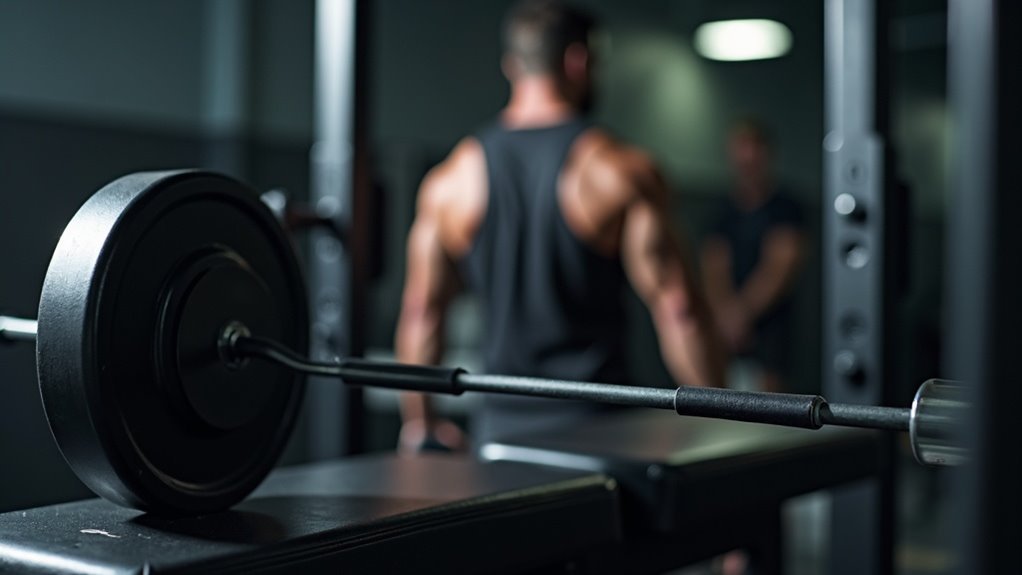
To test your One Rep Max (1RM) safely at home without a spotter, begin by warming up with lighter weights and gradually increase your load in small increments. Utilize a power rack or squat stands for added safety, and ensure that you have collars on your weights to prevent them from slipping. In case you find yourself stuck, tilt the barbell or use bumper plates to safely unload. By following these steps, you can confidently assess your strength at home and work towards achieving your fitness goals—there’s even more to explore in your home gym journey!
Key Takeaways
- Use a power rack or squat stand to support the weight and minimize injury risk during your one-rep max (1RM) testing at home.
- Begin with lighter weights and perform higher repetitions to assess your strength levels before attempting to lift heavier.
- Gradually increase the weights, allowing for 1-5 minutes of rest between sets to ensure proper recovery and safety.
- Always utilize collars on weights during bench presses to ensure quick unloading if necessary.
- If you find yourself unable to complete a lift, safely dump the barbell by tilting it or using bumper plates to prevent injury.
Understanding the Importance of 1RM Testing
Understanding Your One Rep Max (1RM) for Home Workouts
When you grasp your One Rep Max (1RM), you unlock a valuable tool for your home fitness journey. This measure of strength allows you to create effective workout plans and set achievable goals.
Whether you’re a dedicated fitness enthusiast or just starting out, knowing your 1RM helps you monitor your progress, motivating you to challenge yourself each month.
While home workouts offer flexibility, regular assessments can help you avoid injury by ensuring you’re lifting appropriate weights.
By identifying your strengths and weaknesses through 1RM testing, you can target specific areas for improvement, enhancing your overall performance.
Embrace this vital practice to elevate your home training and achieve impressive results!
Preparing for Your Max-Out Workout
To ensure you’re fully prepared for your max-out workout at home, it’s crucial to establish a solid preparation routine.
Begin with a thorough warm-up using lighter weights to ready your muscles and joints. Gradually increase the weight in structured increments, allowing for 1-5 minutes of rest between attempts.
If you have a power rack with safety bars, utilize it to minimize injury risk while lifting solo. Keep a record of your previous lifts to identify a manageable starting weight.
Throughout your workout, prioritize proper lifting technique; if a weight feels too heavy, reassess and lower the load for safety.
Safety Measures When Testing 1RM
Prioritizing safety is crucial when testing your one-rep max (1RM) at home. Always utilize safety equipment such as a power rack or squat stands to support your lifts effectively.
When bench pressing, make sure to use collars to secure your weights, allowing for quick unloading if necessary. It’s wise to start with lighter weights for higher repetitions to gauge your strength and take ample rest periods to help your body recover.
If you feel stuck during a lift, safely dump the weight by tilting the barbell or using bumper plates to minimize injury risk. A thorough warm-up is essential, and ensure your workout area is clear to safely drop weights during your 1RM test.
Alternative Methods for Estimating 1RM
If you’re looking to estimate your one-rep max (1RM) without pushing yourself to the limit, there are several effective methods to consider, especially for those who prefer to work out at home:
- Utilize online calculators that take into account the weight you lifted for multiple repetitions.
- Conduct warm-up sets with progressively heavier weights, stopping comfortably at 3-5 reps to avoid overexertion.
- Begin with lighter weights and make small incremental increases to minimize the risk of injury.
- Monitor your perceived exertion and previous performance to safely adjust weights.
These alternative methods provide a reliable estimate of your 1RM while ensuring you stay safe in the comfort of your home gym, eliminating the need for a spotter.
Post-Test Reflection and Progress Tracking
Testing your one-rep max (1RM) is just the beginning of your strength training journey at home.
After your lift, be sure to document the weight and date to effectively track your progress. Reflect on how you felt during the lift, considering any challenges you faced in your home gym setup. This post-test reflection helps you prepare for future sessions.
Take notes on your warm-up routine and any technique adjustments that impacted your performance, especially when working with home gym equipment. Share your new 1RM with a supportive online community for motivation and encouragement.
Regularly review and adjust your home workout program based on your results, ensuring a safe and effective way to enhance your strength and avoid plateaus. Keep pushing forward!