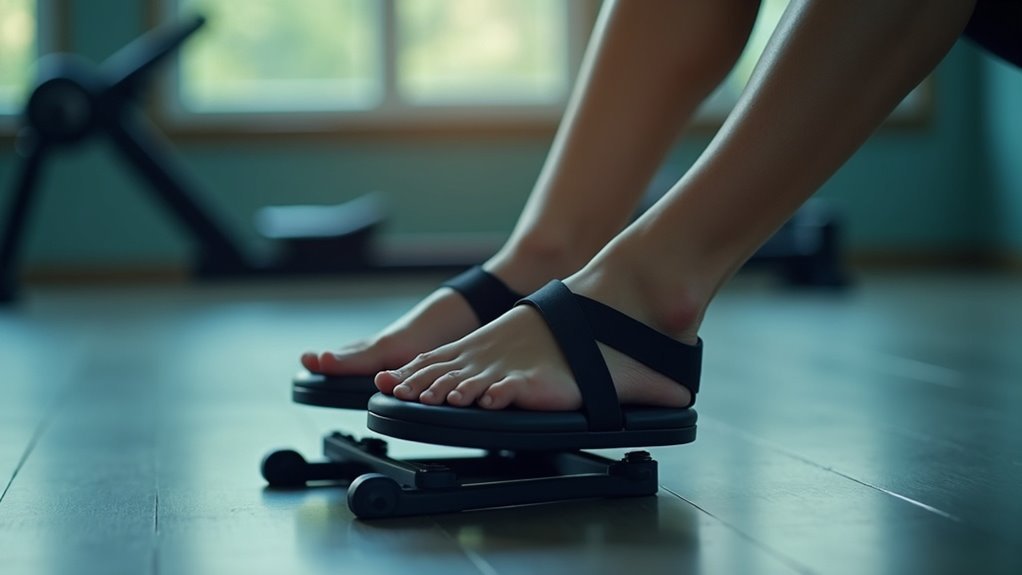
To set your foot position for comfort on the rowing machine, adjust the Flexfoot height according to your foot size and flexibility. Taller individuals generally benefit from lower settings, while those who are shorter may find higher placements more comfortable. Opt for thin-soled shoes or consider rowing barefoot to achieve better connection and alignment with the machine. During your stroke, ensure that your knees stay below your hands to avoid discomfort. Regularly reassessing your setup can significantly enhance your experience and performance, making your home workouts more effective. Explore further tips on optimizing your rowing technique to maximize your home gym experience.
Key Takeaways
- Adjust the Flexfoot height based on your foot size and flexibility to achieve optimal comfort during your home rowing workouts.
- Ensure your shins are vertical in the catch position to enhance your reach and prevent over-compression, which is essential for effective home rowing.
- Regularly experiment with foot position settings to find the most comfortable alignment for your body, making your home exercise routine more enjoyable.
- Opt for thin-soled, flat shoes or consider rowing barefoot to improve foot positioning and enhance your connection with the equipment for better performance at home.
- Keep an eye on your knee positioning to ensure they remain below your hands, promoting effective rowing mechanics and maximizing the benefits of your home gym sessions.
Understanding the Importance of Foot Position
When you use home gym equipment, the position of your feet is crucial for your overall comfort and performance, especially during exercises like rowing.
It’s important to consider the ideal catch position, where your shins should remain vertical. A high foot placement can limit your reach, while a low placement might lead to over-compression of your legs. Finding the right balance that complements your body mechanics is essential.
Achieving the ideal catch position with vertical shins is vital; balance your foot placement to enhance reach and avoid leg compression.
Make sure to experiment with different foot settings on your equipment to enhance your leg drive and technique.
Wearing thin-soled flat shoes or exercising barefoot can help maintain the best foot angle. Personal comfort is key; adjust your setup to ensure efficient workouts and minimize discomfort as you strive to stay healthy and fit at home.
Adjusting the Flexfoot Height
To achieve optimal comfort and performance while using home gym equipment, adjusting the Flexfoot height is essential for accommodating your individual foot size and body mechanics.
If you have larger feet, consider a lower setting for optimal comfort during your workouts. Conversely, if you’re shorter, a higher position helps maintain proper alignment and stability.
Taller individuals should also lower their Flexfoot to maximize efficiency and power during exercises. If you wear thicker-soled shoes, adjusting the Flexfoot setting can prevent discomfort and enhance your training experience.
Regularly experiment with these adjustments to find what works best for your unique flexibility and workout style, ensuring a more effective and enjoyable experience at home.
Choosing the Right Footwear
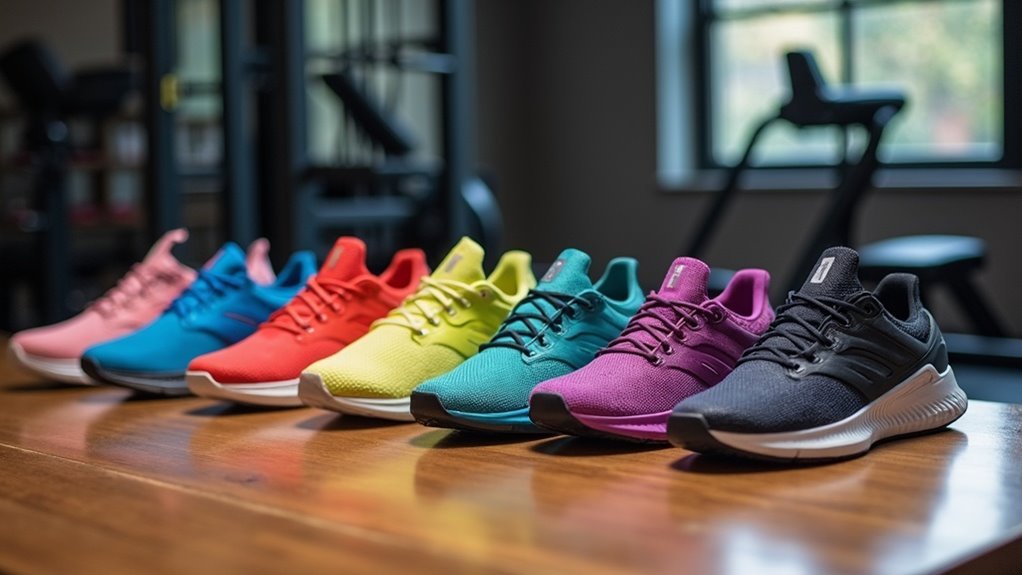
How can the right footwear transform your home workouts? Choosing thin-soled flat shoes enhances your foot positioning and comfort on various home gym equipment, allowing for optimal performance.
You might even consider exercising barefoot or in socks, which can improve your connection with the ground and the equipment. However, avoid thick-heeled shoes, as they can misalign your foot angle and lead to discomfort during your workouts.
Exercising barefoot or in socks enhances your ground connection, while thick-heeled shoes can cause misalignment and discomfort.
If you prefer thicker-soled footwear, lowering the settings on your equipment may be wise to maintain proper knee alignment.
Ultimately, prioritize your personal comfort, as your individual preferences can significantly impact your overall exercise experience at home.
Considering Flexibility and Its Impact
While you mightn’t realize it, your flexibility plays a significant role in how effectively you can set your foot position for comfort while using home gym equipment.
Consider these key points:
- Limited flexibility may require a lower foot adjustment on equipment to avoid discomfort during exercises.
- Taller individuals often prefer a lower setting for comfort, while shorter individuals may need a higher adjustment to maintain proper form.
- Experimenting with foot position adjustments can tailor your workout experience to your individual flexibility and enhance your performance.
- Footwear impact is essential; thicker-soled shoes may necessitate a lower foot setting for proper alignment and movement.
Understanding your flexibility not only enhances comfort during workouts but also boosts your overall exercise efficiency at home.
Finding Your Personal Comfort
Understanding your flexibility is crucial for finding your personal comfort when adjusting your foot position for home gym equipment, especially for exercises like rowing.
Start by experimenting with different height settings on your rowing machine, ensuring your knees rest comfortably below your hands during the stroke. If you have larger feet or are taller, a lower setting might be more suitable for you, while shorter individuals often find a higher setting more comfortable.
Additionally, consider your footwear; thin-soled athletic shoes work well, while thicker soles may require a lower foot position.
Always prioritize your comfort, as there’s no one-size-fits-all solution. Tailoring your setup to your preferences will significantly enhance your home workout experience, making it both enjoyable and efficient.
Experimenting With Foot Placement
To find your ideal foot placement for home workouts, start by adjusting the Flexfoot height based on your foot size and flexibility.
Consider how your choice of footwear impacts your positioning; thick-soled shoes may necessitate a lower setting for optimal comfort.
Regularly reassessing your foot position will help you customize your setup, ensuring a more effective and enjoyable exercise experience at home.
Adjusting Flexfoot Height
As you experiment with adjusting the Flexfoot height on your home gym equipment, remember that finding the right foot placement is essential for your comfort and performance during workouts.
Consider these factors:
- Larger feet generally need a lower setting for proper positioning during exercises.
- Taller individuals often benefit from a lower Flexfoot to maintain proper alignment and form.
- Shorter individuals should try a higher setting to avoid over-compression and ensure effective movement.
- Your individual flexibility levels can necessitate adjustments for optimal range of motion.
Prioritize your personal comfort; there’s no one-size-fits-all solution.
Taking the time to fine-tune your Flexfoot height can greatly enhance your overall workout experience and contribute to your fitness journey at home.
Testing Various Footwear
While experimenting with various footwear for your home gym, you’ll quickly notice how each choice can greatly impact your comfort and performance on the rowing machine.
Opt for thin-soled flat shoes to maintain the proper foot angle on the Flexfoot, as thicker soles may lead to knee discomfort. Alternatively, rowing barefoot or in socks can enhance your connection with the machine, allowing for better adjustments in foot position.
Pay attention to how each footwear option affects your knee alignment; if you prefer thicker shoes, consider lowering the Flexfoot setting to prevent over-compression.
Make your personal comfort a priority by trying different combinations to find the ideal setup for your unique rowing experience at home.
Personalizing Foot Position
How can you find the perfect foot position for your rowing experience at home? Personalizing your foot placement is essential for both comfort and performance, especially when using home gym equipment.
Start by experimenting with the Flexfoot height:
- Adjust it lower if you have larger feet or thick-soled shoes, ensuring a secure fit during your workout.
- A lower setting can also help if you have limited flexibility, allowing for a smoother rowing motion.
- Taller individuals often benefit from a lower position, while shorter users might prefer a higher setup to optimize their stroke.
Always prioritize your comfort and make gradual adjustments based on your home rowing experience.
Listen to your body and don’t hesitate to tweak your setup until you discover the sweet spot that enhances your at-home workout routine.
Enhancing Your Overall Rowing Experience
To enhance your overall home rowing experience, focus on achieving ideal foot placement that aligns with your body’s unique needs.
Adjusting the Flexfoot height and experimenting with different footwear can greatly improve your comfort and performance during each session.
Optimal Foot Placement
Achieving ideal foot placement on the RowErg is essential for maximizing your rowing efficiency and comfort, especially for those looking to enhance their home workout routine.
To optimize your performance, consider these key factors:
- Maintain vertical shins at the catch position for effective leg drive.
- Taller individuals should use a lower Flexfoot setting to prevent over-compression, ensuring a comfortable and effective workout.
- Shorter individuals benefit from a higher Flexfoot position for improved knee clearance, allowing for a more natural rowing motion.
- Experiment with foot positioning and Flexfoot height based on your flexibility and personal preferences to find what works best for you.
Wearing thin-soled shoes or rowing barefoot can enhance foot angle, improving your connection with the machine.
Conversely, if you prefer thicker shoes, you may need to adjust the Flexfoot setting to avoid discomfort during your sessions.
Personal Comfort Adjustments
Finding the ideal foot position on the RowErg is just the start of customizing your home workout experience.
Experiment with different Flexfoot settings to find what feels best for you. Adjust the height according to your foot size and height—taller individuals often benefit from a lower setting. If you have limited flexibility, a lower position can help prevent over-compression during your rowing stroke.
Consider wearing thin-soled shoes or rowing barefoot for a more natural foot angle. Always ensure that your knees remain below your hands during the stroke, making adjustments as needed for comfort.
Using seat pads can further enhance your overall rowing experience, making your home gym workouts more enjoyable and effective.