To prevent slippery floors from sweat in your home gym, start by enhancing ventilation with exhaust fans and opening windows to lower humidity levels. Utilize dehumidifiers to remove excess moisture from the air, aiming to maintain humidity between 30-50% for an optimal workout environment. Regularly inspect and repair any leaks or cracks in your flooring, as these can contribute to increased moisture levels. Implement practical strategies, such as using towels during your workouts and ensuring proper airflow afterward. Get ready to discover more effective tips to keep your home gym floors dry and safe, so you can focus on your fitness journey without worry.
Key Takeaways
- Utilize dehumidifiers to maintain optimal humidity levels in your home gym, reducing moisture buildup on floors and preventing slippery surfaces that could lead to accidents during your workouts.
- Ensure adequate ventilation by installing exhaust fans and opening windows after your exercise sessions to help clear out humid air and keep the environment comfortable.
- Always keep towels nearby to wipe down sweat from both your workout equipment and the floor, minimizing the risk of slipping while you focus on your fitness goals.
- Regularly inspect your flooring for leaks or cracks and promptly address any issues to eliminate potential moisture sources that can contribute to slippery conditions.
- Consider adding moisture barriers beneath concrete floors to prevent water from seeping to the surface, ensuring a safer workout space in your home gym.
Understanding the Causes of Sweating Floors
When warm, humid air meets cooler concrete surfaces, it can lead to sweating floors, a common issue in many home gyms. This condensation occurs when temperature swings cause moisture in the air to settle on your floor slab. High humidity levels, especially during summer workouts, can worsen this problem.
Without proper moisture barriers beneath the concrete, water can migrate to the surface, increasing the likelihood of sweating. Additionally, concrete’s capillaries absorb moisture from the ground, which is particularly common in basements and garages where home gym equipment is often stored.
Over time, this condensation can lead to efflorescence, creating unsightly white patches that detract from the overall aesthetic of your workout space. To maintain a comfortable and inviting home gym, consider investing in moisture control solutions that can help keep your floors dry and your workout environment pleasant.
Effective Ventilation Techniques
Effective ventilation techniques are crucial for maintaining a dry and safe environment in your home gym. By improving air circulation, you can significantly lower humidity levels and prevent condensation on floors. Here are some strategies to consider:
| Technique | Benefits |
|---|---|
| Install exhaust fans | Quickly removes humid air |
| Open windows for cross-ventilation | Introduces fresh air to dilute humidity |
| Use attic fans | Enhances overall air circulation |
| Regularly maintain systems | Ensures efficient operation |
In addition, incorporating moisture barriers can further combat dampness, ensuring your workout space remains safe and slip-free. Invest in effective ventilation for a healthier and more enjoyable exercising environment at home.
Utilizing Dehumidifiers for Humidity Control
How can you keep your home gym safe and slip-free? Utilizing dehumidifiers is a smart solution.
These devices extract moisture from the air, effectively lowering humidity levels to 30-50%, which prevents condensation on your gym floor. By strategically placing portable dehumidifiers in high-humidity areas like basements or dedicated workout spaces, you can target problem zones directly.
Regularly emptying the water pan or using a continuous drainage option boosts a dehumidifier’s efficiency. Not only do dehumidifiers help prevent slippery surfaces during your workouts, but they also eliminate musty odors and inhibit mold growth, creating a healthier and more inviting environment for you and your family to exercise at home.
Repairing Leaks and Cracks
To create a safe and slip-free environment in your home gym, it’s crucial to address any leaks and cracks that could introduce moisture.
Begin by thoroughly inspecting all areas, including basements and garages, for any visible damage. For minor cracks in your concrete slab, apply a concrete patching compound to seal them effectively.
Thoroughly inspect basements and garages for damage, and seal minor concrete cracks with patching compound for a safe gym environment.
If you encounter larger cracks or persistent leaks, it may be wise to hire a professional to ensure thorough repairs, which can help prevent mold growth and maintain a healthy workout space.
Additionally, regularly check your plumbing systems to avoid leaks that can elevate humidity levels, and conduct routine inspections to catch any issues early, preventing them from leading to sweaty floors that could disrupt your exercise routine.
Implementing Preventative Measures
While maintaining a clean and safe home gym environment, it’s essential to implement several preventative measures to combat slippery floors.
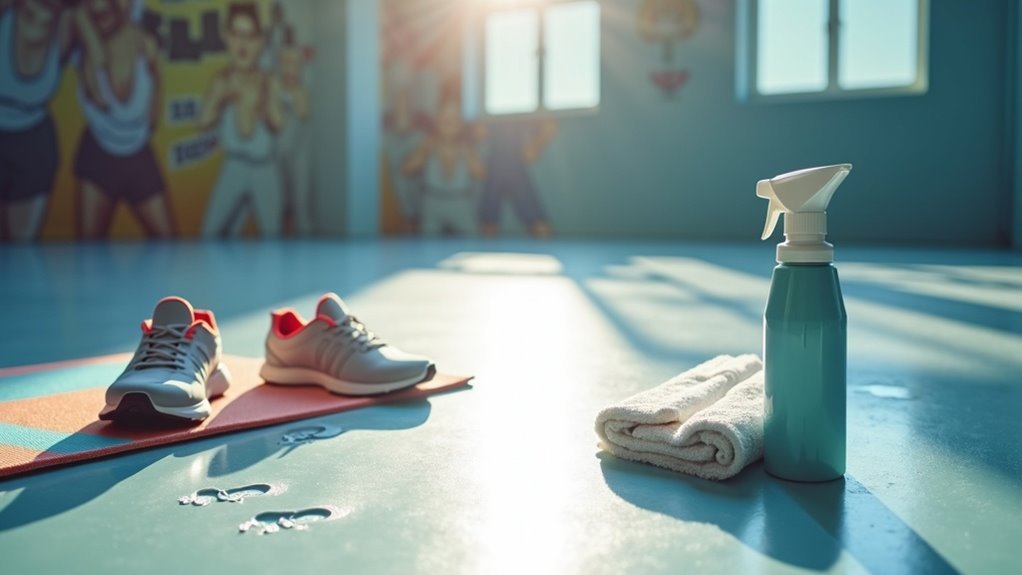
Cover any water sources, such as water bottles, to minimize evaporation and reduce humidity levels. When using equipment that may cause sweating, have towels on hand to absorb moisture and prevent excess vapor in the air.
After workouts, ensure proper ventilation by opening windows or using exhaust fans to eliminate humidity from the space. If you do laundry, consider drying clothes outdoors to prevent raising indoor humidity levels.
Finally, perform routine maintenance checks for leaks or cracks in the flooring, as they can introduce excess moisture and create slippery surfaces, posing a risk during workouts.