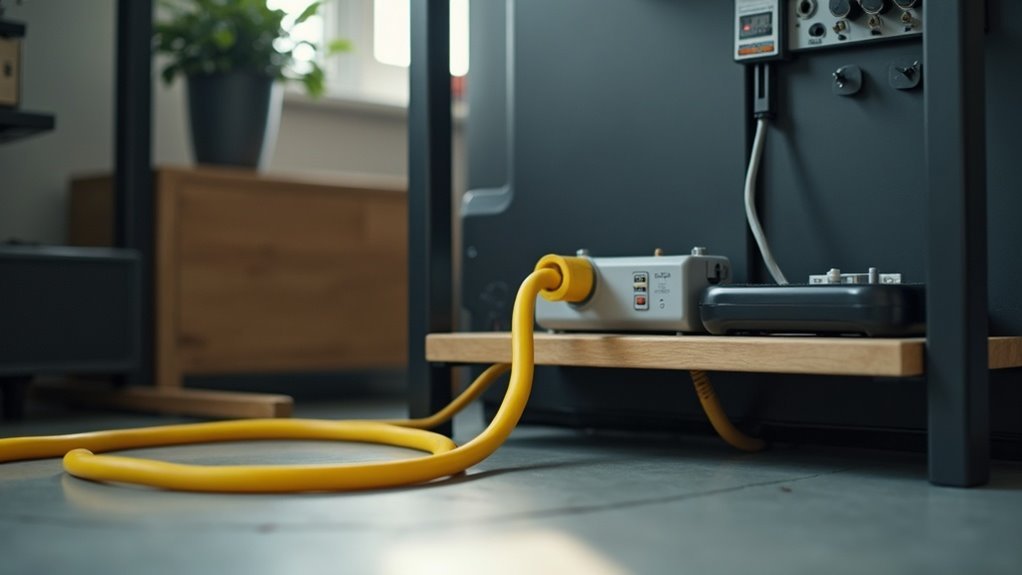
To prevent extension cord hazards while using your home gym equipment, ensure that you use cords rated for the specific power load required by your machines. Avoid daisy-chaining multiple cords together; instead, opt for a single, properly rated extension cord that can handle the demands of your workout gear. Implement GFCI protection, especially in areas prone to moisture, such as near a pool or in a basement gym. Regularly inspect your cords for any signs of damage or wear. Keep cords out of high-traffic areas to minimize the risk of tripping and maintain a clutter-free workout space for a safer exercise environment. Educate yourself on safe practices for using both machines and cords to foster a healthier and more secure home gym experience. More safety tips are available to help you stay fit and safe while working out at home.
Key Takeaways
- Use heavy-duty extension cords that are appropriately rated for the power load of your home gym machines to prevent overheating and electrical hazards.
- Avoid daisy-chaining multiple extension cords; instead, use a single properly rated cord to minimize risks while you work out.
- Regularly inspect your extension cords for any damage and ensure that all equipment is in good condition to prevent electrical failures during your exercise routine.
- Employ Ground Fault Circuit Interrupters (GFCIs) in areas of your home gym that are prone to moisture, reducing the risk of electric shock while you exercise.
- Keep your workout area clear of obstacles and ensure proper storage of cords to prevent tripping hazards, creating a safe environment for your home fitness journey.
Recognize the Risks of Extension Cord Use
When setting up your home gym, it’s important to recognize the risks associated with using extension cords, as improper usage can lead to serious hazards.
Safety in your workout space relies on common sense; plugging multiple extension cords together can result in electrical overload, increasing the risk of fire. Additionally, using damaged cords can lead to injuries or fires, so be sure to conduct regular inspections.
Ensure safety in your workout space by avoiding multiple extension cords and regularly inspecting for damage to prevent fire hazards.
High-demand exercise machines, such as treadmills or ellipticals, should never be powered by extension cords, as they can exceed amperage limits, leading to overheating.
Always utilize Ground Fault Circuit Interrupters (GFCIs) to protect against electric shocks. By prioritizing these safety precautions, you can create a healthier and safer environment for your home workouts.
Choose the Right Extension Cords
Understanding the risks of extension cord use is crucial when setting up your home gym. To ensure that you select the right extension cords for your exercise equipment, make sure they’re rated for the specific power load your machines require to prevent overheating.
Choose heavy-duty electrical cords for high-demand appliances, as lightweight options may not support the necessary voltage and current. Always verify that your cords have independent testing marks, such as “UL,” which confirm they meet safety standards.
Additionally, opt for longer extension cords instead of connecting multiple shorter ones. This approach minimizes the risk of electrical hazards associated with inadequate length capacity, allowing you to focus on your fitness goals without worry.
Implement GFCI Protection
To enhance safety in your home gym, implementing Ground Fault Circuit Interrupters (GFCIs) is essential, particularly in areas prone to moisture.
GFCI protection significantly reduces the risk of electric shock by cutting off power when it detects any current imbalances. This quick response not only aligns with OSHA electrical safety standards but is crucial in wet conditions commonly found in home gyms.
Consider using extension cords equipped with built-in GFCI protection, as they offer extra safety when cords are frequently moved around your workout space.
Regular testing of GFCIs ensures they’re functioning correctly, effectively minimizing electrical hazards.
Installing GFCIs is a smart, cost-effective measure that protects you from potential injuries related to electrical faults while you focus on your fitness goals at home.
Avoid Daisy-Chaining Cords
Daisy-chaining extension cords is a hazardous practice that significantly increases the risk of electrical dangers in your home gym.
To ensure safety and comply with extension cord guidelines, consider these important tips:
- Use only one properly rated extension cord instead of connecting multiple cords.
- Verify that the extension cord can handle the power load required by your equipment.
- For distances exceeding 100 feet, opt for temporary power distribution boxes rather than daisy-chaining cords.
- Be aware that daisy-chaining can cause overheating and voltage drops, which heighten the risk of equipment malfunction or electrocution.
Prioritizing safety means using extension cords correctly in your home gym.
Regularly Inspect and Maintain Cords
To ensure a safe workout environment at home, regularly inspect your extension cords used with gym equipment for any physical damage, such as fraying or exposed wires.
Pay close attention to plug connections and check the flexibility of the cords; any stiffness or cracks indicate deterioration that requires immediate replacement.
Check for Physical Damage
Regular inspections of your home gym equipment are essential for maintaining safety during your workouts.
To prevent accidents and ensure a safe exercise environment, you must regularly check your equipment for any physical damage.
Follow these steps:
- Examine cables for fraying or exposed wires.
- Look for broken connectors or attachments on machines.
- Inspect areas that experience a lot of movement or stress, such as weights and resistance bands.
- Discard any equipment held together with tape or that shows other signs of wear.
Conduct these checks before each workout session to minimize risks.
Remember, damaged equipment can lead to injuries, so maintaining a routine inspection schedule helps guarantee your home gym is safe and effective.
Stay vigilant to create a healthier and safer workout space.
Inspect Plug Connections
Inspecting plug connections is crucial for ensuring electrical safety in your home gym, where you focus on your health and fitness.
Regularly check plug connections for signs of wear, such as frayed wires or broken prongs, to prevent potential hazards during your workouts. Look for independent testing marks, like “UL,” on your extension cords to confirm they meet safety standards.
Ensure that plugs fit snugly into outlets without any wobbling, as loose connections can lead to overheating and increase the risk of fire. Additionally, inspect the protective outer cover of extension cords for any cracks or abrasions that might expose wires.
Conduct routine maintenance checks and replace any damaged cords promptly—following these safety tips will help you avoid electrical shock or fire while you’re focused on achieving your fitness goals.
Monitor Cord Flexibility
Monitoring the flexibility of your extension cords is essential for maintaining electrical safety, especially in a home gym environment where equipment is frequently moved and adjusted.
Regularly checking your extension cords for any signs of physical stress can help prevent hazards and ensure a safe workout space. Here are key steps to guarantee cord integrity while you focus on your fitness goals:
- Inspect for fraying or damaged insulation to avoid electrical issues.
- Verify that the flexible jacket isn’t compromised by staples or fasteners that could lead to malfunction.
- Look for signs of bending or pinching that can cause internal damage, which might disrupt your workouts.
- Store extension cords properly to avoid kinking and unnecessary stress, keeping your gym area organized and safe.
Keep Cords Out of High-Traffic Areas
To maintain a safe home gym environment, it’s essential to keep extension cords out of high-traffic areas. Placing cords in designated workout zones significantly reduces trip hazards, which can lead to injuries.
Avoid positioning cords near entrances and exits to ensure clear pathways and minimize accidents while you exercise. Regularly assess your workout space for potential hazards, such as cords crossing walkways.
Consider using cord covers or routing cords along walls to keep your gym organized and safe. By taking these precautions, you can effectively reduce the likelihood of injuries and create a safer workout space, allowing you to focus on achieving your fitness goals without the worry of accidents.
Educate Workers on Safe Practices
While using home gym equipment can be convenient, it’s essential to educate users on the associated hazards to ensure their safety.
Here are key practices to promote safe usage:
- Use equipment according to the manufacturer’s instructions to avoid injuries and ensure proper functionality.
- Never attempt to modify or repair equipment yourself, as this can lead to malfunctions and potential accidents.
- Inspect equipment before use for any damage, such as frayed cables or broken parts, and discard or repair any unsafe items.
- Always maintain a clear workout space, free of obstacles, to prevent trips and falls during exercise.
Regular health and safety workshops can reinforce these practices effectively.