To maintain calluses for barbell work while exercising at home, it’s important to train consistently and gradually increase weight to promote healthy skin adaptation. Focus on proper grip techniques to minimize excessive build-up and avoid overgripping, especially when using home gym equipment. Regularly file thick calluses with a pumice stone and keep your hands moisturized to prevent cracking. If you experience rips or tears, clean and protect the area to ensure effective healing. Using protective gear like grips can enhance your performance and keep your hands safe during your home workouts. Explore further for more tips on maintaining your fitness routine at home!
Key Takeaways
- Gradually increase barbell weights to allow your skin to adapt and build strong calluses, ensuring a comfortable and effective home workout.
- Regularly file down thick calluses every 2-3 weeks to prevent painful tears, keeping your hands in optimal condition for home exercises.
- Use proper grip techniques when lifting at home, positioning your hands to distribute pressure evenly and minimize excessive callus formation.
- Keep your hands dry with chalk during lifts to reduce friction and enhance grip stability, ensuring a safe and effective workout session.
- Incorporate daily moisturizing to maintain skin elasticity and prevent cracking on callused areas, promoting healthy hands for all your home gym activities.
Understanding the Purpose of Calluses
Calluses play a crucial role in your home workouts by acting as a protective barrier against the friction and pressure your hands experience during exercises.
These toughened areas help distribute pressure evenly, reducing the risk of blisters and skin damage, which is essential for maintaining a consistent workout routine.
Strong calluses can significantly enhance your grip strength on various equipment, allowing for better control and technique during your exercises.
Strong calluses boost your grip strength, enhancing control and technique for a more effective workout experience.
By regularly caring for your calluses, you can prevent excessive build-up that may lead to painful tearing, ensuring your hands stay healthy and your performance remains steady.
Embrace calluses as a natural adaptation to the demands of home fitness.
Building Calluses Through Consistent Training
Building strong calluses is an important aspect of home workouts for both men and women, and it requires a commitment to consistent training.
Approaching your exercise routine with the right mindset is key. Gradually increasing your lifting weights at home allows your skin to adapt to the pressure, promoting effective callus formation. Consistent gripping of your home gym equipment during workouts leads to necessary thickened skin, as seen in many dedicated lifters.
To prevent calluses from becoming too thick or painful, avoid excessive overgripping; this way, you can maintain an ideal grip on your equipment while reducing the risk of skin tears.
Regular maintenance, such as gentle filing, ensures your calluses remain functional without compromising your performance, allowing you to stay healthy and continue exercising effectively at home.
Proper Grip Techniques for Callus Maintenance
To maintain your calluses effectively while exercising at home, focus on your grip placement and hand position on your home gym equipment, such as barbells or dumbbells.
Positioning your grip at the proximal digital crease helps distribute pressure evenly, while avoiding overgripping minimizes friction that can lead to thicker calluses.
Optimal Grip Placement
While you may not think about grip placement, it plays an essential role in maintaining healthy calluses during your home workouts.
To achieve the best grip placement with your equipment, keep the bar closer to your fingers at the proximal digital crease. This minimizes skin folding and helps distribute pressure more evenly, preventing excessive callus formation.
Consider these tips for your home gym routine:
- Allow the bar to rest comfortably in your palm during lifts.
- Use a neutral grip to reduce strain and enhance comfort.
- Regularly adjust grip width for different exercises to promote versatility.
- Emphasize proper lifting technique to ensure even pressure distribution.
Focus on Hand Position
Getting your hand position right is essential for maintaining healthy calluses during your home barbell workouts. Focus on grip placement at the proximal digital crease to reduce skin folding and limit excessive callus formation.
A neutral grip helps minimize unnecessary friction and pressure on your hands, promoting better callus health while you exercise at home. Regularly monitor and adjust your hand positions to evenly distribute pressure across your palms, preventing overly thick calluses.
Experiment with different grip styles, like wider or narrower grips, to find the best position that reduces stress on your hands while still allowing for effective lifting.
And don’t forget to use chalk for added grip to enhance your performance during home workouts!
Minimize Overgripping Techniques
Proper grip techniques are essential for maintaining healthy calluses during barbell workouts, especially for those exercising at home.
To minimize overgripping and protect your hands, consider the following tips:
- Grip the bar at the proximal digital crease to minimize skin folding and enhance comfort.
- Keep a relaxed grip to reduce friction and pressure on your palms.
- Use chalk sparingly to improve your grip without increasing friction.
- Experiment with different hand positions to evenly distribute pressure and prevent strain.
Regular Care and Maintenance of Callused Hands
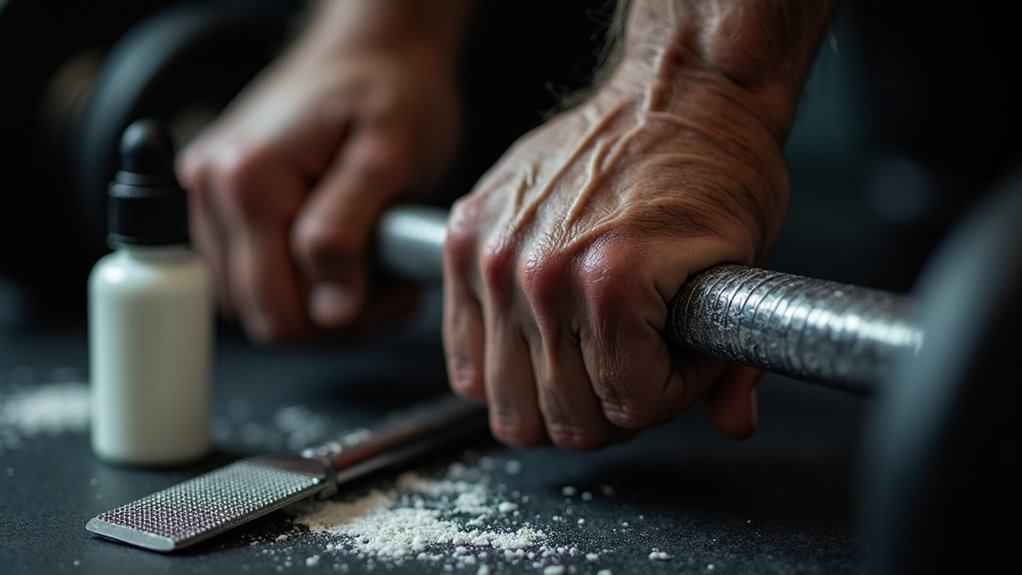
Maintaining the health of your callused hands is crucial for optimal performance during your home workouts, especially when using barbell equipment. To care for your hands, be sure to moisturize daily. This helps maintain skin elasticity and prevents cracking, which is essential for your fitness routine. Every 2-3 weeks, gently file down thick calluses with a pumice stone to prevent tears and ensure comfort during lifting. Soaking your hands in warm water beforehand will soften the skin, making this maintenance step easier. Avoid cutting calluses too deeply, as this can lead to painful tears and potential infections that could disrupt your training. Regularly check the size and condition of your calluses to keep them healthy and ready for your next workout.
| Action | Frequency |
|---|---|
| Moisturize | Daily |
| File with pumice stone | Every 2-3 weeks |
| Soak hands | Before filing |
Preventing Excessive Callus Build-up
To prevent excessive callus build-up while working out at home, pay attention to your grip technique and keep your hands dry with chalk.
Ensure you’re holding your weights correctly to minimize skin folding and limit callus formation.
Regular maintenance, such as filing down calluses every few weeks, will help keep them manageable and comfortable for your at-home fitness routine.
Proper Grip Technique
When you grip the barbell correctly at home, you not only enhance your workout performance but also protect your hands from excessive callus build-up.
Here are some key aspects of proper grip technique to help you maintain healthy hands while exercising:
- Position your grip closer to your fingers to minimize skin folding and discomfort.
- Utilize chalk to keep your hands dry, reducing friction during your lifts.
- Avoid overgripping; this helps distribute pressure evenly across your hand, making for a more comfortable workout.
- Explore different hand positions to discover what feels best for you and supports your home fitness goals.
Regular Maintenance Routine
While you may value the protective benefits of calluses during your home workouts, neglecting their care can result in discomfort and potential injury.
To keep your calluses at an optimal thickness, establish a regular maintenance routine every 2-3 weeks. Begin by soaking your hands in warm water to soften the skin, making the following steps easier.
Using a callus razor, gently shave down any excessive build-up, ensuring the calluses remain level with your palms. This careful approach helps prevent painful tearing during lifts, allowing you to maintain your grip and perform effectively without putting unnecessary stress on your skin.
Use of Chalk
Using chalk during barbell workouts is crucial for maintaining a solid grip and keeping your hands dry, which helps prevent excessive friction and callus build-up. Proper chalk application can enhance grip strength while minimizing skin irritation, essential for anyone exercising at home.
Here are some tips for effective chalk use in your home gym routine:
- Apply chalk to clean, dry hands for optimal results.
- Use just enough to improve grip strength without overdoing it.
- Avoid excessive use to prevent larger, rougher calluses.
- Remember to wipe off any excess chalk after your lifting sessions.
By balancing your chalk routine, you can maintain healthy calluses and enhance your lifting performance, all while ensuring your skin stays in great condition.
Whether you’re a man or woman working out at home, incorporating these tips will help you maximize your fitness journey.
Managing Callus Rips and Tears
Callus rips and tears can be a frustrating setback in your home gym routine, but managing them effectively is essential for a quick recovery. Start by cleaning the area with mild soap and water to prevent infection. Apply antibiotic ointment and cover the wound with a sterile bandage. When working out, use medical tape over a torn callus to prevent further damage. Keeping the area moisturized will aid in healing and prevent dryness. If it doesn’t heal within a week, consulting a healthcare professional is important to avoid complications.
| Step | Action | Purpose |
|---|---|---|
| Clean Area | Use mild soap and water | Prevent infection |
| Apply Ointment | Use antibiotic ointment | Protect the exposed skin |
| Cover with Bandage | Use a sterile bandage | Shield from irritation |
| Moisturize | Keep area hydrated | Promote healing |
Utilizing Protective Gear for Enhanced Grip
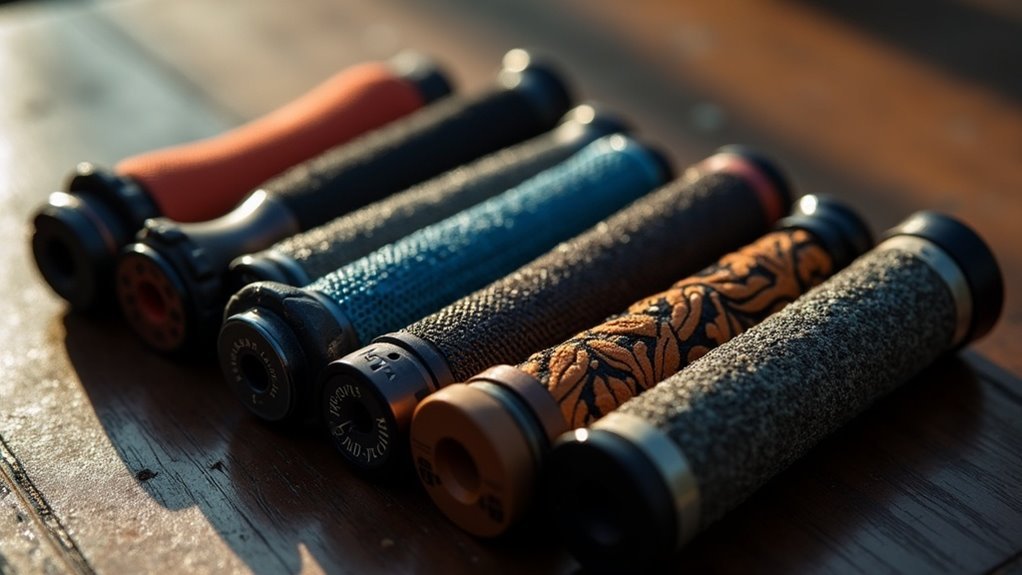
When you’re lifting heavy at home, the right protective gear can make all the difference in your grip and hand health. By utilizing gloves or grips, you reduce friction and lower the risk of excessive callus formation and rips.
Consider these options for a better grip during your home workouts:
- Versa Gripps: Enhance grip strength while minimizing friction, perfect for various exercises.
- Gymnastic grips: Distribute pressure evenly to maintain hand health, ideal for pull-ups and other bodyweight movements.
- Chalk: Improve grip and reduce moisture, ensuring a solid hold on your equipment.
- Callus management tools: Use pumice stones or razors post-workout to keep your hands smooth and healthy.
Investing in protective gear not only boosts your performance but also keeps your hands safe and healthy for those intense home gym sessions!