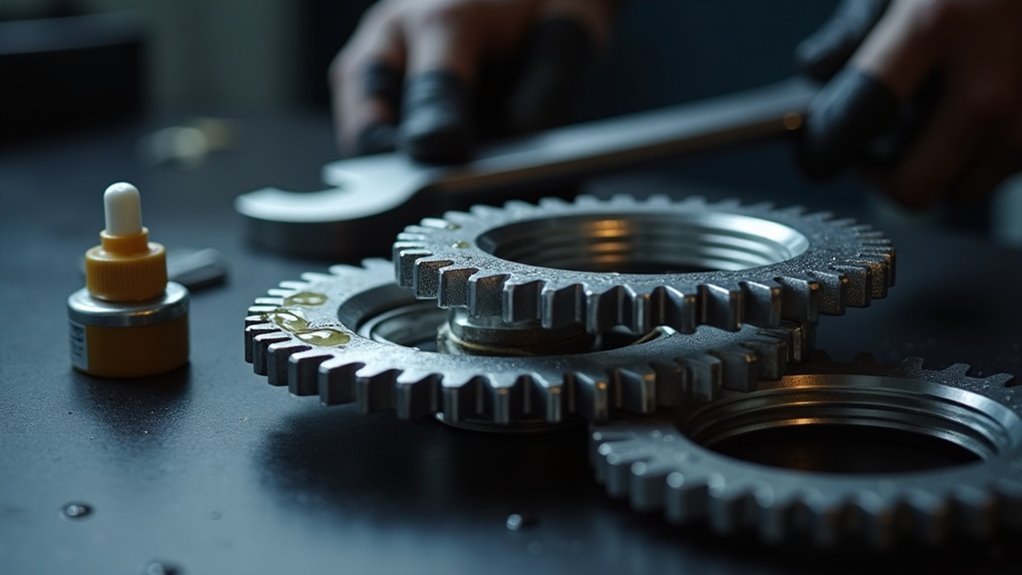
To keep your home gym equipment’s metal parts from squeaking, regularly inspect joints and screws for looseness, and tighten any loose connections. Lubricate components using silicone spray or white lithium grease, ensuring even application for smooth operation. Consider adding rubber washers or felt pads to absorb vibrations, minimizing noise during your workouts. Schedule maintenance every few months to address wear and tear on your equipment. If noise persists despite these steps, it might be time to explore additional solutions to maintain the longevity and efficiency of your home gym setup. This will help ensure a more enjoyable and distraction-free exercise experience.
Key Takeaways
- Regularly inspect and tighten screws and bolts on your home gym equipment to prevent loose components that can lead to squeaking during workouts.
- Apply suitable lubricants like silicone spray or white lithium grease to metal joints to reduce friction and ensure a smooth exercise experience.
- Clean the surfaces of your equipment before applying lubrication to enhance the adhesion and effectiveness of the lubricant.
- Consider using rubber washers or felt pads between metal contact points on equipment to absorb vibrations and minimize noise, allowing for a more focused workout.
- Schedule inspections and lubrication of your home gym equipment every 6-12 months to maintain optimal condition and prevent annoying squeaks that can disrupt your exercise routine.
Common Causes of Squeaking in Metal Parts
Squeaking in metal parts of home gym equipment can be a common annoyance that detracts from your workout experience. This noise often arises when loose screws and bolts allow components, such as weight stacks and pulleys, to rub against each other.
Inadequate lubrication is a primary cause, as it leads to increased friction between metal surfaces. Additionally, worn-out components may expose raw metal, exacerbating the squeaking during use.
Inadequate lubrication increases friction, while worn-out components can expose raw metal, worsening squeaking noises during workouts.
Moreover, uneven weight distribution can cause twisting and bending of equipment, further intensifying the issue. Regular use of your home gym, combined with environmental factors like humidity and temperature changes, can lead to metal fatigue over time, increasing the likelihood of squeaking.
To maintain the integrity and quiet operation of your gym equipment, it’s essential to address these common causes promptly, ensuring a more pleasant and effective workout experience.
Identifying the Source of the Noise
To identify the source of noise in your home gym equipment, start by inspecting common noise sources like joints and screws for looseness or wear.
Implement troubleshooting techniques such as gently moving the equipment and listening for specific squeaks to narrow down the location.
Finally, conduct a thorough inspection of all metal components and consider environmental factors, such as flooring or nearby objects, that might contribute to the noise.
Keeping your gym equipment well-maintained not only enhances your workout experience but also supports your overall health and fitness goals.
Common Noise Sources
While investigating the source of annoying noises in your home gym equipment, you’ll likely encounter several common culprits that contribute to squeaking sounds.
Loose bolts can create friction at metal joints, leading to noise as components rub against each other during your workouts.
Additionally, if equipment is positioned too closely to walls or furniture, friction increases with movement, amplifying the squeaking sound.
Worn or damaged components may expose raw metal surfaces, heightening the issue.
Moreover, uneven weight distribution, especially when lifting or adjusting weights, can cause twisting, resulting in creaking noises.
Regular use may also lead to metal fatigue, compounding these contact point issues and promoting persistent noise, which can be distracting as you strive to stay healthy and fit at home.
Troubleshooting Techniques
Identifying the source of noise in your home gym equipment requires a systematic approach that focuses on various connection points and potential friction areas.
Start by examining all joints and connections for looseness, as these are common culprits in equipment like weight benches and squat racks. To pinpoint where the noise is coming from, test the equipment by applying weight or movement.
Remove any coverings to inspect for wear, rust, or debris accumulation. Also, ensure that the equipment isn’t touching walls or other furniture, as friction can amplify noise during your workouts.
Lastly, check for uneven floor surfaces that may cause instability, which can further contribute to squeaking and distraction while exercising.
Inspection Steps
Before you dive into inspecting your home gym equipment, it’s crucial to prepare your space for a comprehensive examination of the metal components. Start by clearing any items around your gym setup to ensure easy access to all equipment. Inspect all joints, screws, and bolts for signs of looseness or wear. Test the equipment by applying your weight to identify any unusual noises. Check for metal-on-metal contact and ensure that equipment isn’t positioned too close to walls or other items. Look for any unevenness on the floor that may lead to instability or unwanted movement during workouts. Use the table below to guide your inspection steps.
| Inspection Focus | Action |
|---|---|
| Joints & Bolts | Check for tightness and wear |
| Metal-on-Metal Contact | Observe spacing with surroundings |
| Unevenness | Inspect floor for stability issues |
Effective Lubrication Techniques
To effectively reduce squeaking in your home gym equipment, it’s important to choose the right lubricant, such as silicone spray or white lithium grease.
Apply a thin, even layer directly on the joints and ensure proper distribution by moving the parts during your workout routine.
Regular maintenance, including reapplication every 6-12 months, is essential for keeping your equipment in peak condition, allowing you to focus on your fitness goals without distractions.
Choosing the Right Lubricant
How can you ensure the longevity and efficiency of your home gym equipment? Choosing the right lubricant is essential.
Silicone spray offers a moisture-resistant barrier and effectively reduces friction for general use on gym machines. For high-pressure situations, white lithium grease withstands extreme temperatures, ensuring peak performance of heavily used equipment like weight machines and treadmills.
If you need a quick solution, 3-in-1 oil penetrates rust but requires more frequent application, ideal for maintaining tools and accessories. In tight spaces, powdered graphite provides dry lubrication without attracting dust, perfect for small parts on exercise equipment.
Application Techniques for Effectiveness
Choosing the right lubricant is crucial for maintaining your home gym equipment and ensuring a smooth workout experience. To reduce any squeaking noise from your machines, apply a thin layer of lubricant directly onto the affected areas after clearing away any dust or debris.
Silicone spray or white lithium grease work best for long-lasting results on equipment like treadmills and weight benches. After application, gently move the equipment to ensure even distribution of the lubricant, which helps it penetrate deeper into the contact points.
For enhanced performance, consider adding rubber washers or felt pads to absorb vibrations and further minimize noise during your workouts. Regular maintenance is key, so reapply lubricant every 6-12 months to keep your equipment in top shape and to catch any wear or damage to metal components.
This will help you maintain an effective and enjoyable home workout routine.
Maintenance Frequency and Tips
While maintaining metal parts of your home gym equipment, it’s essential to establish a consistent lubrication schedule to prevent squeaking and ensure peak performance during your workouts.
Regularly lubricate every 6 to 12 months using silicone spray or white lithium grease. Before you lubricate, clean the joints and surfaces to enhance adhesion and effectiveness.
For a squeaking exercise equipment, check and tighten all bolts to eliminate movement that causes noise. Consider applying a thin layer of grease for long-lasting protection, followed by silicone spray for immediate noise reduction.
Additionally, use rubber washers or felt pads between metal contact points to absorb vibrations, creating a quieter and more enjoyable workout environment.
Tightening Loose Connections
To prevent squeaking in your home gym equipment, it’s essential to regularly inspect and tighten any loose connections on the frame. Loose screws and bolts are common sources of squeaking, particularly in metal exercise equipment like weight benches and squat racks. Use a wrench or screwdriver to tighten these connections, ensuring proper alignment to minimize movement and friction during your workouts.
| Action | Frequency |
|---|---|
| Inspect all joints | Every few months |
| Tighten loose screws | As needed |
| Check bolt stability | Every few months |
| Maintain alignment | During tightening |
| Address issues promptly | Immediately |
This proactive approach helps ensure a quieter and more stable workout environment, allowing you to focus on your fitness goals without distractions.
Adding Padding for Vibration Absorption
Adding padding between metal contact points can significantly enhance the functionality of your home gym equipment, making your workout experience more enjoyable by reducing vibrations and minimizing squeaks.
Incorporating materials like rubber washers or felt pads can effectively absorb shocks and prevent metal-on-metal contact, ensuring a smoother workout.
Additionally, using foam strips or anti-slip pads under the legs of the frame not only dampens noise but also stabilizes movement, making your home gym safer and more efficient.
For optimal results, consider high-density materials such as neoprene or silicone to cushion metal parts and reduce friction, further mitigating unwanted sounds.
Ensure that all padding is securely affixed and properly aligned to maximize its noise-reducing capabilities, contributing to a quieter and more effective exercise environment for both men and women.
Regular Maintenance Practices
Regular maintenance is crucial for ensuring your home gym equipment remains in top condition and operates quietly. To keep your gear performing at its best, make it a habit to inspect and tighten screws and bolts every six months. This simple step enhances stability and prevents annoying noises caused by loose joints.
Additionally, consider applying lubricants such as WD-40 or silicone spray periodically to minimize friction and noise at metal connections.
When assembling your equipment, don’t overlook the importance of incorporating rubber washers. These can significantly absorb vibrations, contributing to a smoother workout experience.
It’s also vital to check for uneven floor contact; using furniture pads can help level the frame and distribute weight evenly, enhancing stability during your workouts.
To maintain peak performance and silence, schedule routine maintenance checks. Regularly evaluate the condition of metal parts, and replace any worn or damaged components promptly.
This proactive approach not only prolongs the life of your equipment but also supports your commitment to staying healthy and fit through home exercise.
When to Consider Replacement
While regular maintenance can extend the life of your home gym equipment, certain signs indicate it’s time for a replacement. If you notice persistent squeaking from machines despite repairs, it’s a clear warning sign.
Persistent squeaking from your gym machines, even after repairs, signals it’s time for a replacement.
Additionally, check for structural damage such as bent frames or unstable bases; replacement is often more cost-effective than ongoing repairs. A sagging or worn-out mat can indicate inadequate support during workouts, signaling a need for an upgrade.
Extensive rust or corrosion on equipment compromises safety and stability, requiring immediate replacement.
Finally, if your gym equipment exceeds its expected lifespan and maintenance fails, investing in new, high-quality gear can enhance your workout experience and reduce noise considerably.