To integrate wearable data with your home training logs, begin by ensuring secure data transmission using Bluetooth Low Energy (BLE) to connect your devices. Next, accurately map the metrics from your wearables to your training logs for a smooth integration experience. Utilize user-friendly interfaces that allow for live updates from your devices, and make it a habit to regularly check the accuracy of your data. By analyzing this combined information, you can uncover performance trends and effectively optimize your home workout regimen. Explore additional strategies for enhancing your fitness journey through effective data integration and maximizing your home gym experience.
Key Takeaways
- Establish secure Bluetooth Low Energy (BLE) connections for seamless data transmission between wearable devices and home gym training logs, ensuring you can track your workouts effectively.
- Ensure user-friendly interfaces for easy access to live updates from connected wearable devices, allowing you to stay informed about your fitness progress.
- Utilize data mapping techniques to accurately translate health metrics into your training logs, helping you optimize your home workout routines.
- Regularly monitor data accuracy to identify and address discrepancies in your performance tracking, ensuring that you get the most out of your home gym equipment.
- Integrate compatible fitness apps for automated data uploads, enhancing the effectiveness of your training logs and helping you achieve your fitness goals at home.
Understanding Wearable Data and Its Importance
As you incorporate wearable data into your home gym routines, you’ll quickly discover its importance in improving your fitness journey.
This data, derived from devices like smartwatches and fitness trackers, enables you to monitor key health metrics such as physical activity levels, heart rate, and sleep quality.
By analyzing these insights, you can spot trends and tailor your home workout plans, helping to prevent injuries and enhance results.
Personalization becomes easier as you adapt your training schedules based on how your body responds to exercise and recovery.
With advancements in data analytics and AI-driven insights, you can make informed decisions that ensure your home workouts align perfectly with your health and fitness aspirations.
Types of Wearable Devices for Training
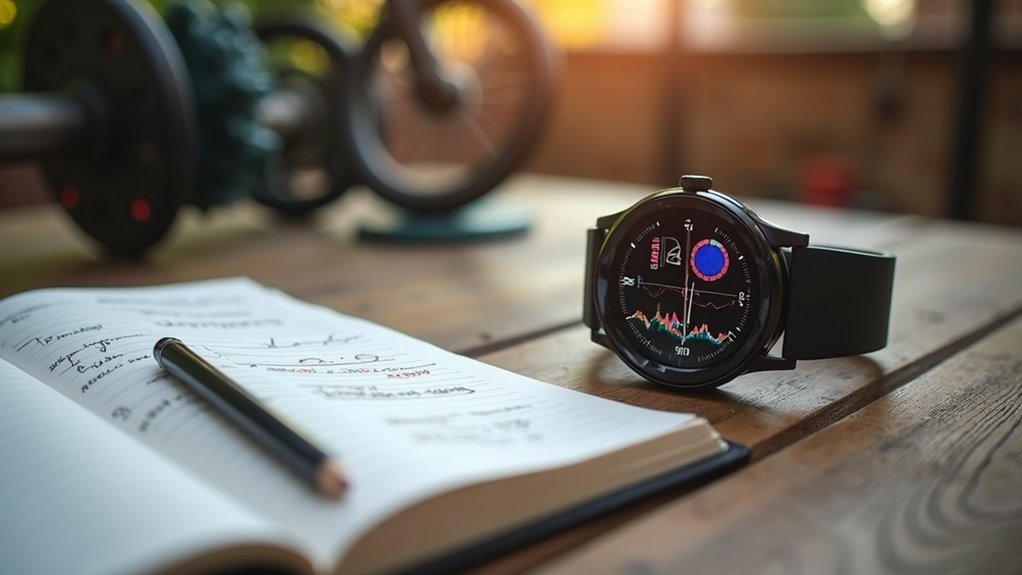
When considering wearable devices for home training, smart health watches and fitness trackers are essential tools for enhancing your fitness journey.
Smart health watches monitor key metrics such as heart rate and stress levels, providing valuable insights into your performance and recovery at home.
Meanwhile, fitness trackers concentrate on activity levels and sleep stages, helping you fine-tune your training regimen effectively and maintain a healthy lifestyle from the comfort of your home gym.
Smart Health Watches
Home gym equipment has transformed the way individuals monitor their fitness routines, integrating advanced technology to provide precise metrics that enhance performance.
These devices track key health metrics like heart rate, activity levels, and calories burned, delivering real-time data during workouts. With integrated features, you can effectively monitor your exercise sessions, whether it’s weightlifting, cardio, or yoga routines.
Many models support wireless synchronization with fitness apps, allowing seamless data transfer for in-depth performance analysis. Additionally, features like VO2 max estimation and sleep tracking support overall health monitoring, optimizing your home workouts and ensuring adequate recovery for improved results.
Stay committed to your fitness journey from the comfort of your home!
Wearable Fitness Trackers
Home gym equipment has transformed the way individuals approach fitness, making it easier for both men and women to maintain their health and achieve their goals from the comfort of their own homes.
Equipment like adjustable dumbbells, resistance bands, and stationary bikes provide effective ways to monitor and enhance your training routine. Many of these tools come with built-in technology that tracks your workout metrics, including heart rate, calories burned, and workout duration.
Advanced models may even offer personalized training programs and progress tracking, crucial for optimizing your fitness regimen. Additionally, seamless integration with fitness apps allows you to log workouts, set goals, and share your progress with friends or trainers.
Built-in reminders and notifications help keep you motivated and accountable on your journey to better health.
Compatible Applications for Data Synchronization
Many users find that integrating wearable data with home workout logs greatly enhances their fitness tracking experience. Popular applications like MyFitnessPal and Strava allow seamless synchronization of health metrics from wearable devices, making it easier for individuals to monitor their progress from the comfort of their home gym.
This integration automates the upload of real-time data, including heart rate and calories burned, ensuring accurate tracking of workouts. Additionally, apps like Flo provide valuable insights by incorporating menstrual cycle data, which can help users optimize their training plans.
Steps to Integrate Wearable Data With Training Logs
To effectively integrate wearable data with training logs for your home gym routines, start by selecting appropriate APIs that guarantee compatibility with various health and fitness platforms.
Follow these steps:
- Establish secure data transmission protocols like Bluetooth Low Energy (BLE) or Wi-Fi for real-time synchronization of metrics, ensuring a seamless connection between your wearable devices and training logs.
- Utilize data mapping techniques to accurately translate wearable data, ensuring seamless integration of heart rate, activity duration, and calories burned, crucial for tracking your progress during home workouts.
- Implement a user-friendly interface that displays live updates from connected devices, enhancing your performance analytics and motivating you to push your limits.
Regularly monitor data accuracy to address discrepancies, ensuring reliable training logs that elevate your home fitness experience.
Stay committed to your health goals with the right equipment and data integration!
Analyzing Combined Data for Performance Insights
When you analyze combined data from wearables and home workout logs, you can uncover performance trends that guide your fitness journey.
By examining correlations between metrics like sleep quality and workout intensity, you can make informed adjustments to your home training regimen that boost recovery and overall results.
This integration not only personalizes your workout approach but also helps identify areas for enhancement, ensuring a more strategic path to achieving your health and fitness goals from the comfort of your home gym.
Performance Trend Analysis
Integrating wearable data with your home workout logs not only enhances your understanding of performance trends but also empowers you to make informed adjustments to your fitness routine.
By analyzing this combined data, you can:
- Identify correlations between your workout loads and physiological responses.
- Leverage real-time feedback from wearable devices to detect signs of overtraining or undertraining.
- Utilize AI algorithms for data-driven decisions that optimize your home workout schedules.
Regularly evaluating these insights promotes personalized training, enhances goal setting, and improves performance forecasting.
This allows you to adapt your workout intensity and strategies based on observed trends and past outcomes.
This approach ensures that you stay healthy and achieve your fitness goals right from the comfort of your home gym.
Data Correlation Insights
By integrating wearable data with your home workout routines, you can uncover valuable insights into how different factors affect your fitness and recovery. This data synergy enables real-time analysis of metrics such as heart rate and sleep patterns, revealing trends that impact your workout results.
For example, you may find that improved sleep quality leads to better recovery times, allowing you to maximize your home training efforts. With the help of wearable devices, you can fine-tune your workout intensity based on immediate feedback, ensuring your regimen is optimized for success.
Advanced data analytics can also identify correlations between specific home workouts and performance outcomes, empowering you to make informed decisions that enhance your personalized fitness strategy effectively.
Personalized Training Adjustments
As you analyze the combined data from your home gym equipment and fitness logs, you’ll uncover nuanced insights that can drive personalized training adjustments.
By focusing on real-time metrics, you can enhance your workout effectiveness:
- Monitor heart rate to customize your workout intensity based on your fitness level and health status.
- Evaluate sleep patterns to optimize recovery, which is essential for effective home training programs.
- Assess VO2 max and lactate threshold to set precise performance goals and reduce the risk of injury.
This continuous data flow empowers you to implement proactive fitness monitoring, ensuring your home workout regimen evolves with your physiological responses for better results.
Stay committed to your health and fitness journey right from the comfort of your home!
Benefits of Integration for Athletes
When home gym enthusiasts integrate wearable data with their training logs, they unlock a wealth of real-time insights that can significantly elevate their workout routines. This combination enables you to monitor vital metrics like heart rate and sleep quality, ensuring that your training sessions are as effective as possible.
By utilizing data from wearables, you can detect patterns, fine-tune workout intensity, and avoid the pitfalls of overtraining. Moreover, this integration supports the establishment of specific, data-driven fitness goals, enhancing your focus on achieving your health objectives.
Additionally, linking your dietary choices to workout performance can optimize your nutrition and hydration strategies, leading to better decision-making and deeper engagement with your overall wellness—transforming your at-home fitness journey.
Overcoming Challenges in Data Integration
Integrating data from home gym equipment with fitness logs can enhance your workout experience, but there are a few challenges to consider for a smooth integration.
To tackle these issues, keep the following in mind:
- Data Quality: Ensure accurate tracking by regularly calibrating your equipment and selecting high-quality sensors, as factors like improper setup can affect performance metrics.
- User Adoption: Promote the use of your home gym equipment by educating users on the benefits of tracking their fitness progress and making the data-sharing process user-friendly.
- Regulatory Compliance: If your home gym setup involves health-related data, ensure compliance with relevant regulations to protect your personal information while integrating data for a more effective fitness journey.
Future Trends in Wearable Data and Training Integration
With the rapid advancement of technology, the future of integrating wearable data with home workout routines promises to revolutionize how fitness enthusiasts track and optimize their performance from the comfort of their homes.
Expect wearable devices to deliver real-time feedback, enabling immediate adjustments to your workout intensity based on biometric data. Advanced algorithms and predictive analytics will personalize insights, enhancing your fitness tracking.
Wearable devices will provide real-time feedback, allowing instant adjustments to optimize your workout intensity based on biometric data.
Cloud-based platforms will facilitate seamless data sharing for comprehensive health monitoring, ensuring you stay on top of your fitness goals.
Furthermore, the rise of virtual coaching will empower trainers to access real-time data, allowing them to make informed decisions that optimize your home workout regimen while minimizing injury risks.
Embrace these innovations for improved health and fitness outcomes.