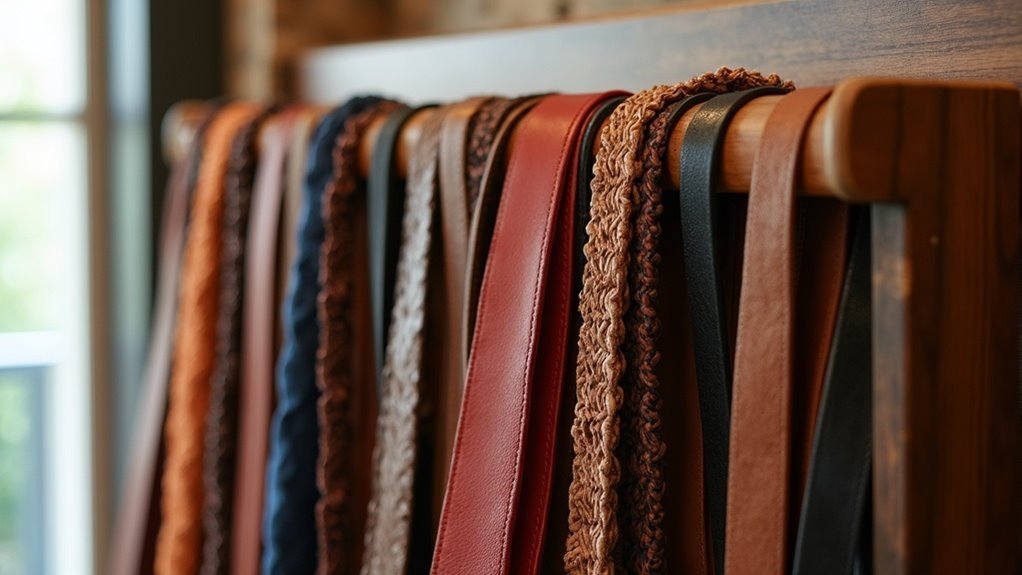
To hang belts, bands, and wraps neatly in your home gym, start with specialized hangers that prevent tangling and damage to your equipment. Ensure your belts are clean and dry before hanging them, and always hang them flat or straight to allow for proper air circulation. Consider color-coding your gear for easy access during workouts. Install hangers at a comfortable height to make your exercise routine more efficient, and add lightweight weights to your belts to prevent stretching over time. For more tips on optimizing your home gym storage space, you’ll find further insights below.
Key Takeaways
- Utilize specialized multi-hook hangers to keep your belts, bands, and wraps organized and tangle-free, ensuring easy access during your home workouts.
- Maximize your space by hanging items vertically on closet doors or wall-mounted racks, making your home gym more efficient and accessible.
- Color-code and group your items by type to streamline your workout routine and quickly find what you need.
- Always make sure your items are clean and dry before hanging them to prevent damage and preserve their shape for optimal performance.
- Regularly check and adjust the positioning of your gear to avoid creasing and maintain a tidy and organized workout area.
Choosing the Right Hanger for Belts
When it comes to organizing your home gym gear, choosing the right hanger for your belts is essential for maintaining order and preventing damage. A specialized belt hanger with multiple hooks can efficiently store several workout belts without damaging them, ensuring they remain tangle-free and crease-free.
Alternatively, a simple coat hanger with clips offers a cost-effective solution for holding your exercise belts. You can maximize vertical space by installing hangers on closet doors or wall-mounted racks in your home gym.
For added convenience, opt for hangers with a rotating design, allowing you to access different belts easily during your workouts. Remember, adding weight to hanging leather belts helps maintain their shape over time, which is crucial for a well-organized gym setup.
Preparing Belts for Hanging
With the right hanger in place, it’s time to prepare your workout belts for hanging. First, ensure your belts are clean and dry to avoid moisture-related damage.
For leather belts used in weightlifting or resistance training, gently stretch them to their full length—this helps maintain their shape and prevents cracking. Avoid folding or creasing; hang them straight for proper air circulation.
If your belt has a large buckle, spool it into itself to reduce bulk and prevent tangling. Finally, consider adding a weight to the end of the belt to minimize excessive stretching during workouts.
These steps will keep your workout belts looking great and ready for your home gym sessions.
Organizing Belts by Color and Style
To keep your home gym organized, start by color-coding your workout gear for a visually appealing display.
Next, group your equipment by type, so you can quickly find the perfect item for your exercise routine.
Using clear bins or labeled sections will help maintain this neat arrangement and make your selection process efficient, ensuring a smooth workout experience every time.
Color-Coding Techniques
Organizing your home gym equipment by category and usage not only enhances the visual appeal of your workout space but also streamlines your exercise routine.
Start by arranging your equipment in a way that groups similar items together, such as weights, resistance bands, and cardio machines. This method creates an intuitive layout for selecting the right gear for your workout.
You can further enhance organization by labeling sections of your storage area, such as strength training, flexibility, and cardio, to improve identification and accessibility.
Regularly reassess your collection as you acquire new equipment, ensuring your gym remains orderly and reflects your evolving fitness goals. This approach saves time and enhances your overall workout efficiency.
Style Categories
When you organize your home gym equipment by type and purpose, it not only enhances the aesthetic of your workout space but also simplifies the selection process for your exercise routine.
Grouping equipment into categories like strength training, cardio, or flexibility helps you quickly find the right tools for various workouts. A color-coded system can further boost efficiency, allowing for easy pairing of equipment while maintaining a cohesive training environment.
Keep similar types together, such as weights or resistance bands, to prevent wear and tear. Consider labeling sections in your storage area to differentiate between equipment types and purposes, ensuring quick access and organized storage for your home gym essentials.
Visual Display Ideas
Creating an organized space in your home gym extends beyond just your workout equipment; it also includes your accessories, like belts.
By arranging your belts by color and style, you not only enhance the visual appeal of your space but also improve functionality.
Here are three effective ideas tailored for your home gym:
- Multi-Tiered Hanger: Utilize vertical space to display each belt’s unique design, making it easy to grab what you need before your workout.
- Labeling System: Implement tags to categorize styles or colors, allowing for quick and efficient access to your belts when you’re gearing up for exercise.
- Pegboard Display: Optimize your wall space with a pegboard, giving you the flexibility to customize your arrangement based on your personal style and preferences.
Installing Hangers for Optimal Space-Saving
To maximize space in your home gym, installing hangers specifically designed for resistance bands and workout accessories is essential.
Consider a multi-tiered hanger that stacks your bands vertically, saving horizontal space. Alternatively, use a simple coat hanger; just slide a resistance band over the hook and hang it on the wall or a rack for an affordable organization solution.
For visibility and easy access, install a dedicated accessory rack with hooks on the inside of your gym door or walls. Make sure you place the hanger or rack at a comfortable height, making it hassle-free to grab and store your workout gear whenever needed.
Enjoy a neatly organized workout space!
Preventing Stretching With Weight
While it may seem straightforward to hang weights, preventing stretching is crucial for maintaining their shape and longevity. By adding a small weight to the end of your hanging equipment, you can keep it taut and avoid damage.
Preventing stretching is essential for weights; a small weight at the end keeps equipment taut and prolongs its lifespan.
Here are some tips to help you:
- Use a lightweight weight to maintain tension without risking damage to your gear.
- Ensure the weight is evenly distributed to prevent bending or warping.
- Regularly check and adjust the tension to keep your equipment secure.
Consider using a soft elastic or clip to secure the end for easy access, while keeping everything organized and in optimal condition for your home workouts.
Maintaining the Shape of Leather Belts
Hanging leather belts is essential for preserving their shape and preventing damage, much like how proper storage of gym equipment is crucial for maintaining its longevity. By using a belt hanger or a simple coat hanger, you can keep your belts organized and accessible, just as you would with your weights or resistance bands. Always hang them flat to avoid creases that can lead to cracking—similar to ensuring your yoga mat is rolled correctly to avoid wear. Consider adding a weight to the end of the belt to prevent excessive stretching, akin to securing your dumbbells to prevent them from rolling away. Regularly check and adjust their position to maintain their shape and longevity, just like you would with your workout routine to ensure optimal performance.
| Action | Benefits |
|---|---|
| Hang flat | Prevents creases |
| Use a belt hanger | Organizes and protects |
| Add weight | Preserves form |
Alternative Methods for Storing Belts
If hanging isn’t your preferred method, consider rolling your workout belts to save space and prevent creasing.
You can also utilize clever storage techniques by keeping your belts alongside the workout gear they’ll accompany, ensuring everything is organized and accessible for your home gym routine.
Let’s explore these alternative methods to enhance your belt storage while maintaining a clutter-free workout environment.
Rolling Belts Efficiently
Many people find that rolling belts can be an efficient way to store them without sacrificing space or shape, especially in a home gym setting where organization is key. Here’s how to do it effectively:
- Gently spool your belts—avoid tight rolling for leather to prevent cracking, just like you’d care for your workout gear.
- Roll textile belts more tightly—they’re more forgiving and maintain their shape well, making them ideal for quick access during your workout routines.
- Use a soft elastic band to secure your rolled belts, keeping them compact and organized, so you can focus on your fitness goals without clutter.
Store these rolled belts in a bin that allows for some expansion to prevent unraveling over time.
This method not only saves space in your home gym but also keeps your belts looking great, ensuring you’re always ready to tackle your fitness journey!
Hanging Techniques Explained
Storing your home gym equipment effectively not only preserves its functionality but also maximizes your workout space. You can use specialized racks or even simple hooks to keep your equipment organized. Consider adding weights to certain items to prevent them from tipping over. Here are a few methods to try:
| Method | Description | Benefits |
|---|---|---|
| Equipment Rack | Dedicated rack for multiple items | Keeps equipment organized |
| Wall Hooks | Simple alternative for hanging items | Space-saving and accessible |
| Storage Bin | Use bins for smaller items to keep tidy | Easy to transport and store |
Implement these techniques for a well-organized workout area!
Storing on Pants
While it’s convenient to leave gym equipment like resistance bands or jump ropes attached to your workout gear for quick access, this method isn’t ideal for long-term storage.
To maintain your equipment’s integrity, consider these tips:
- Remove Before Washing: Always take your equipment off before laundering your workout clothes to prevent damage.
- Roll or Coil When Not in Use: For short-term storage, roll or coil bands and ropes neatly to avoid tangling and creasing.
- Use Soft Ties: Secure your equipment with soft ties to minimize stretching while stored with your gear.