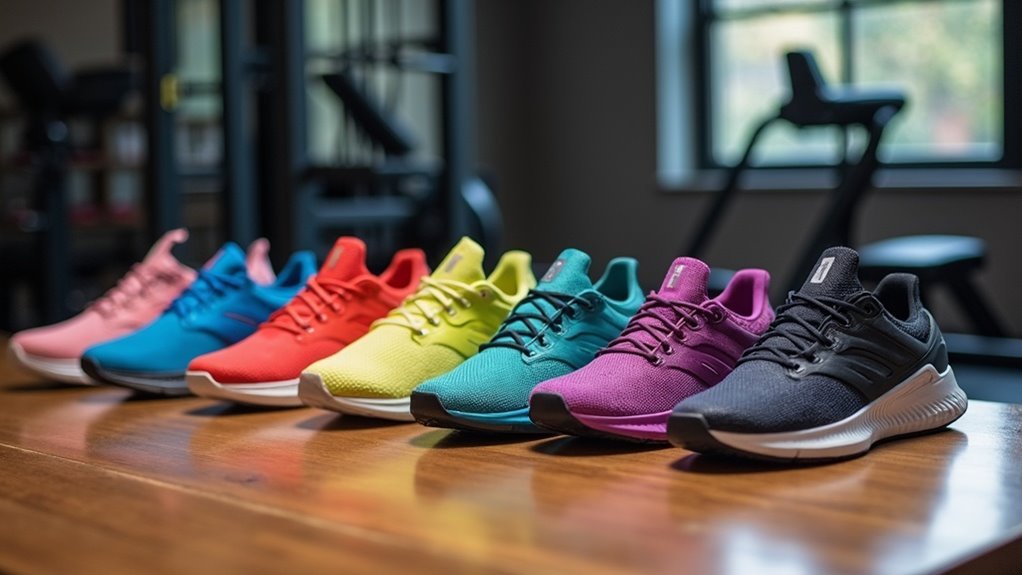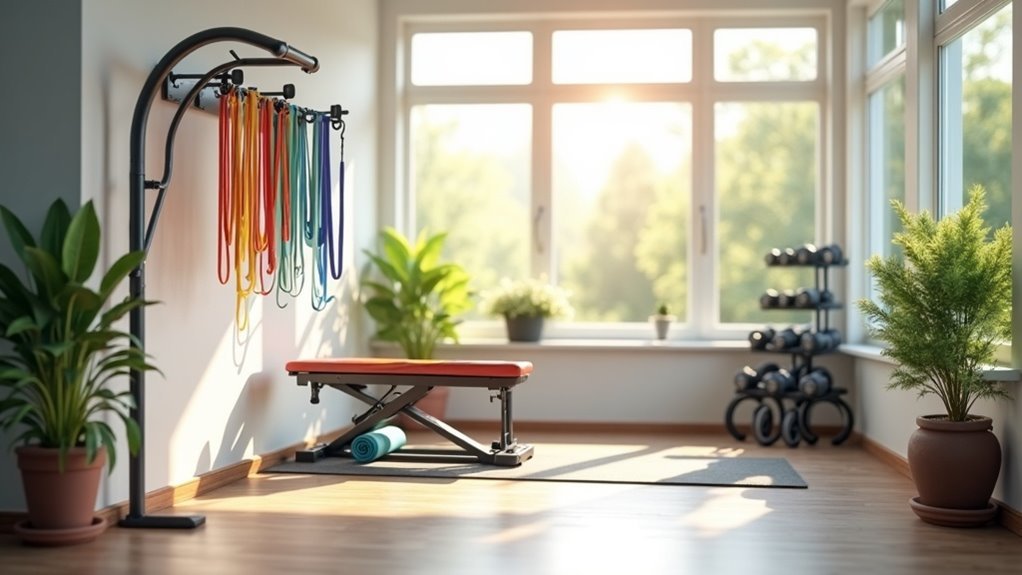
To adapt your home gym for limited mobility, start by measuring your space and ensuring safety with non-slip flooring and clear pathways. Opt for versatile equipment such as resistance bands, adjustable dumbbells, and recumbent bikes, which allow for effective workouts while accommodating various mobility needs. Organize your gym items for easy access, and consider incorporating foldable options to maximize space efficiency. Focus on seated exercises and low-impact cardio to keep your workouts engaging and manageable. Stay motivated by tracking your progress and celebrating milestones along the way. With these practical tips, you’ll create an inclusive workout environment that promotes health and fitness for everyone.
Key Takeaways
- Measure your workout area to ensure at least 36 inches of clear space for safe movement and placement of your home gym equipment.
- Use resistance bands and adjustable dumbbells for versatile, compact strength training options that can be customized to fit your fitness level.
- Arrange your equipment to maintain clear pathways for mobility aids while incorporating non-slip flooring to enhance safety during workouts.
- Include accessible machines and recumbent bikes to provide comfort and support during low-impact cardio and strength exercises.
- Explore online adaptive fitness classes and apps that can help guide your workouts and track your progress effectively, making it easier to stay on top of your fitness goals from the comfort of home.
Assessing Your Space and Needs
How can you ensure your home gym is tailored to your specific needs while accommodating limited mobility? Start by measuring your designated workout area to confirm there’s enough space for equipment, allowing for at least 36 inches for safe movement.
Measure your workout area to ensure at least 36 inches for safe movement and equipment placement.
Check entryways and pathways to ensure they’re accessible for mobility aids, with non-slip flooring to enhance safety and prevent accidents.
Clearly define your personal fitness goals, such as improving upper body strength, to customize your setup effectively.
Consider seeking advice from fitness professionals who specialize in adaptive fitness and can recommend appropriate equipment.
Lastly, prioritize safety features, including adjustable benches and clear pathways, to ensure easy access and minimize tripping hazards in your accessible home gym.
This approach will help you create an effective workout space that supports your health and fitness journey.
Choosing the Right Equipment
Choosing the right equipment is essential for creating an effective home gym tailored to your fitness goals, especially for those managing limited mobility.
Start with resistance bands, as they’re versatile, space-efficient, and suitable for strength training for both men and women. Adjustable dumbbells are a great addition, allowing you to customize your weight selection and fit a variety of exercises in a compact space.
If possible, consider accessible weight machines with adjustable seats and grips for enhanced comfort during workouts. For cardio, recumbent bikes offer stability for low-impact workouts, while hand cycles provide an excellent upper-body exercise option.
Together, these choices can elevate your fitness routine while accommodating your mobility needs, helping you stay healthy and active at home.
Adapting Your Home Gym for Accessibility
Creating an accessible home gym can greatly enhance your workout experience, especially if you or someone you know has limited mobility.
Start by incorporating height-adjustable benches for versatile strength exercises that can be tailored to individual needs.
Incorporate height-adjustable benches to customize strength exercises for everyone’s unique fitness needs.
Arrange your equipment thoughtfully to maintain clear pathways for wheelchairs and mobility aids, ensuring safety and easy access for everyone.
Utilize wall-mounted racks to keep the floor space clear, reducing tripping hazards and making it easier to navigate.
Non-slip flooring is crucial to prevent accidents during both cardio and strength training sessions.
Additionally, consider incorporating foldable or multifunctional equipment to maximize space and offer diverse exercise options that cater to various fitness levels.
These adaptations create an inviting environment for effective and safe workouts, making it easier for both men and women to stay healthy and active in the comfort of their own homes.
Creating an Inclusive Exercise Routine
Adapting your home gym for accessibility is essential for creating an inclusive exercise routine that caters to all fitness levels.
Begin with gentle stretches using resistance bands to improve flexibility and minimize the risk of injury. Incorporate seated workouts featuring resistance bands, dumbbells, and hand cycles to ensure accessibility for everyone, including those with limited mobility.
Focus on low-impact cardio options, such as hand cycling or using a recumbent bike, to support cardiovascular health for both men and women.
Explore online fitness classes designed specifically for individuals with disabilities, offering guided workouts that accommodate various fitness levels.
Lastly, take advantage of fitness apps for tracking progress and adapting routines, ensuring an effective and accessible fitness journey for all.
Staying Motivated
How can you maintain motivation while exercising at home with limited mobility? Start by creating a personalized routine that fits your lifestyle and schedule. Tracking your workouts can enhance accountability and help you celebrate your achievements. Set realistic fitness milestones by breaking your goals into smaller, manageable steps. Use a variety of adaptive home gym equipment to keep your workouts engaging and dynamic. Exercising with friends or family can foster a supportive atmosphere, making your sessions more enjoyable. Here’s a simple table for inspiration:
| Fitness Milestones | Tracking Methods | Support Strategies |
|---|---|---|
| Short-term Goals | Fitness Apps | Workout Buddies |
| Weekly Targets | Journals | Family Participation |
| Monthly Reviews | Progress Charts | Community Groups |
| Celebrate Success | Social Media Posts | Regular Check-ins |
| Long-term Vision | Goal Setting | Motivational Quotes |