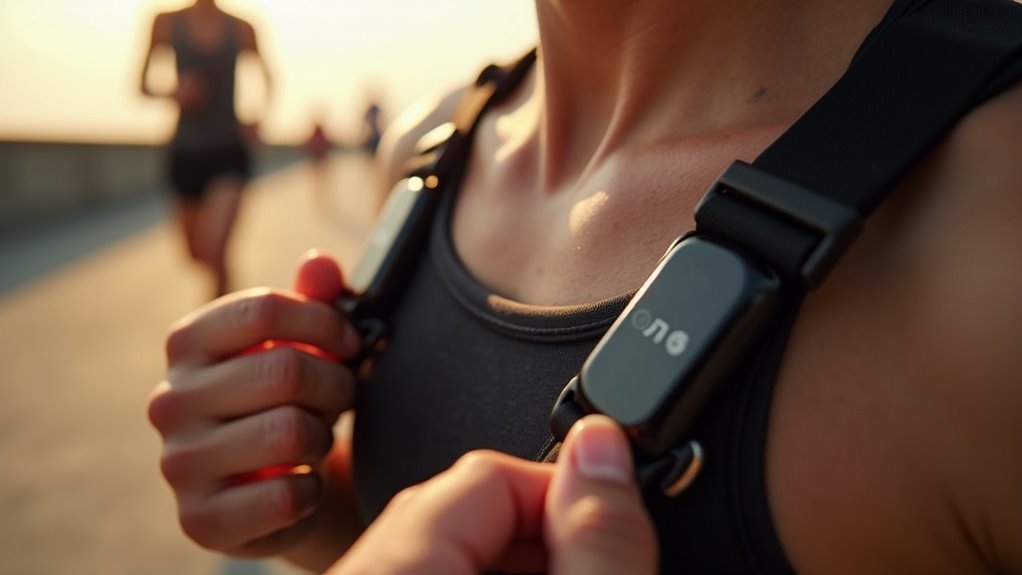
To position your chest strap for accurate readings while exercising at home, place it snugly just below your sternum, centered over your heart. Ensure it’s tight enough to prevent movement, but not so tight that it restricts your breathing. Dampening the electrode areas can improve signal quality for better performance tracking. Avoid wearing the strap over thick clothing or metal components, as these can interfere with readings. Regular checks and maintenance will keep your strap in top condition for consistent heart rate monitoring. Explore more tips to elevate your home workout experience and stay healthy!
Key Takeaways
- Position the chest strap snugly just below the sternum, centered over the heart for optimal accuracy during your home workouts.
- Ensure the strap is tight enough to prevent movement but not so tight that it restricts your breathing, allowing you to focus on your exercises.
- Moisten the electrode areas before use to enhance electrical signal transmission and get the most accurate readings as you track your fitness progress.
- Regularly check the strap’s placement and tightness during your workouts to maintain consistent readings and optimize your training effectiveness.
- Avoid wearing the strap over thick fabrics or clothing with metal components that can disrupt signals, ensuring you get the best performance from your home gym equipment.
Importance of Proper Chest Strap Positioning
When you position a chest strap correctly, you significantly boost the accuracy of your heart rate readings, which is crucial for effective home workouts.
Proper positioning is essential; wear the strap snugly just below the chest muscles and centered over the sternum to ensure accurate contact with the skin. For women, placing the strap just under the bra band can enhance comfort during exercises.
Additionally, wetting the electrode areas can improve signal conductivity, especially in dry conditions. Regular adjustments during your workouts are important, as movement can shift the strap and affect accuracy.
Choosing the Right Chest Strap
Proper positioning of a chest strap is only part of the equation; selecting the right strap is equally crucial for achieving accurate heart rate monitoring. A well-chosen strap ensures you can effectively meet your fitness goals while working out at home.
- It should fit snugly against your skin, ideally just below the sternum, to ensure consistent readings during your home workouts.
- Look for adjustable sizes that accommodate various body shapes, guaranteeing comfort for both men and women.
- Moisture-wicking properties are essential to enhance comfort and prevent chafing, especially during intense home exercise sessions.
Choose a strap equipped with reliable sensors for precise heart rate readings, as chest straps typically outperform wrist-based monitors when it comes to accuracy.
Additionally, consider compatibility with popular fitness apps to optimize your tracking experience, helping you stay motivated and supported in your home fitness journey.
Preparing the Chest Strap for Use
To ensure your chest strap performs optimally during home workouts, start by checking that it’s fully charged or has fresh batteries. This is crucial for obtaining accurate readings throughout your exercise session.
Next, moisten the electrode areas with water or electrode gel to improve the electrical signal, particularly in dry conditions.
Adjust the strap for comfort, ensuring it fits snugly just below the sternum and is centered over your chest without restricting your breathing.
Lastly, make sure that the transmitter is securely attached to the snaps, with the Morpheus logo facing outward and the “L” snap positioned on the left for optimal operation.
Stay committed to your health and fitness journey at home!
Correct Placement on the Body
Positioning the chest strap correctly is essential for accurate heart rate monitoring and overall workout effectiveness, whether you’re exercising at home or elsewhere.
For ideal performance, follow these guidelines:
- Place the strap snugly just below the sternum for stability.
- For women, position it just under the bra band for comfort and optimal skin contact.
- For men, ensure it sits comfortably just below the pectoral muscles.
- Make sure the strap is centered on your chest to avoid misalignment, allowing for a more effective workout.
Ensuring a Snug Fit
To ensure a snug fit while using your home gym equipment, position the chest strap just below your sternum. Adjust it for comfort without compromising the contact of the sensors with your skin.
A secure strap will prevent slippage during your workouts, while maintaining the right level of tightness helps avoid any discomfort or chafing. Regularly check the fit to ensure peak signal quality, placing the sensors directly over your pectoral muscles for optimal performance.
This attention to detail will enhance your home exercise experience and help you stay on track with your fitness goals.
Proper Strap Tightness
While ensuring a snug fit for your chest strap is crucial for accurate heart rate monitoring during your home workouts, finding the right balance of tightness can be challenging.
- A snug strap should rest just below your sternum.
- If it’s too loose, you may experience dropped signals; if it’s too tight, it could restrict your breathing.
- Regularly check and adjust the strap for both comfort and accuracy.
To maintain precise heart rate readings during your home exercises, select the appropriate strap size and make minor adjustments as necessary.
If you feel discomfort, repositioning or loosening the strap slightly can help while ensuring it maintains contact with your skin.
This approach guarantees reliable monitoring and enhances the effectiveness of your workouts at home.
Sensor Positioning Guidelines
For optimal heart rate monitoring during your home workouts, it’s important to position the chest strap just below your sternum. This ensures the sensors align correctly with your heart for accurate readings.
Make sure the strap fits snugly against your skin, as this enhances the reliability of the data. For women, positioning the strap just under the bra band can provide added comfort while still maintaining sensor contact.
To improve conductivity, lightly moisten the sensors with water or electrode gel. It’s also a good idea to regularly check the fit during your exercise sessions, making adjustments as needed to accommodate movement.
Proper sensor positioning is crucial for heart rate monitors to deliver consistent and reliable data, helping you stay on track with your fitness goals at home.
Adjusting for Comfort
While achieving a snug fit is crucial for accurate heart rate monitoring, ensuring comfort during your at-home workouts is equally vital. A well-adjusted chest strap can enhance your exercise experience while providing reliable data.
- Adjust the strap tightness to ensure security without limiting your range of motion.
- If discomfort arises, reposition the strap to alleviate any pressure points.
- Select the appropriate strap size for your body shape to avoid slippage and maintain focus on your workout.
Adjusting for Comfort
How can you ensure your chest strap is both snug and comfortable during home workouts? Start by positioning it just below the sternum, making sure it fits closely against your skin to maintain accurate readings.
Adjust the tightness to prevent chafing while ensuring it doesn’t restrict blood flow. For women, placing the strap just under the bra band can enhance comfort and keep it secure.
Don’t hesitate to shift the strap slightly left or right to find the best position for both signal quality and comfort.
Regularly check the fit, as movements and clothing can alter its placement, impacting your strap’s effectiveness during your home fitness routine.
Common Positioning Mistakes to Avoid
When positioning your chest strap at home, be mindful of common mistakes that can compromise your readings.
Wearing the strap too loose can lead to inaccurate data, while incorrect sensor placement might prevent optimal contact with your skin.
Additionally, be aware that certain clothing can interfere with the sensor’s functionality, so choose your workout gear wisely to ensure you get the most accurate readings as you pursue your fitness goals at home.
Improper Strap Tightness
Many individuals overlook the significance of proper strap tightness when positioning a chest strap for their home workouts. Without the right fit, you may experience inaccurate heart rate readings, which can hinder the effectiveness of your exercise routine.
- A snug fit ensures the strap remains in place during various movements, whether you’re lifting weights or doing cardio.
- Be cautious of overly tight adjustments that can restrict your breathing and comfort.
- Regularly check the tightness of the strap to accommodate any changes in your body position throughout your workout.
If the strap is too loose, it can shift, resulting in inconsistent signals that can affect your performance.
Remember, the strap should sit just below the sternum, allowing for slight adjustments while still maintaining contact with your skin for accurate readings.
Prioritizing proper strap tightness will help optimize your home gym experience and support your fitness goals.
Incorrect Sensor Placement
Positioning your chest strap correctly is essential for accurate heart rate monitoring, which can greatly enhance your home workout experience.
To ensure precise readings, place the strap just below your sternum, centering it over your heart. Avoid placing it too high to prevent discomfort and ensure the monitor’s effectiveness. Additionally, keep it clear of bony areas like your collarbone or ribs to maintain consistent skin contact.
Before wearing the strap, dampen the sensors with water or electrode gel to improve signal quality.
Lastly, make sure the strap fits snugly without restricting your breathing, as a loose fit can result in fluctuating heart rate signals, hindering your progress in achieving your fitness goals at home.
Unfavorable Clothing Interference
Incorrect sensor placement can lead to frustrating inaccuracies in heart rate monitoring, but unfavorable clothing interference often exacerbates these issues, especially when you’re working out at home.
To ensure accurate readings from your heart rate monitor while exercising, keep these tips in mind:
- Avoid wearing clothing with metal components, such as underwire bras or metal buckles, which can disrupt electrical signals.
- Make sure the strap is positioned directly against your skin and not over thick fabrics that may obstruct the sensors.
- Tuck the strap under form-fitting workout gear, like compression tops or leggings, to minimize movement and ensure a stable connection.
Maintenance Tips for the Chest Strap
To ensure your chest strap remains effective and reliable for your home workouts, follow these essential maintenance tips.
After each session, clean your strap by rinsing it with warm water to remove sweat, which helps prevent buildup that can affect accurate readings.
To maintain accurate readings, rinse your strap with warm water after each workout to remove sweat and prevent buildup.
Every few weeks, perform a deep clean using a gentle soap to maintain its integrity and extend its lifespan.
Make sure the sensors are free from moisture or debris to ensure peak performance of your heart rate monitor.
Store the strap in a dry, cool place to protect it from extreme conditions.
Additionally, regularly inspect your strap for any signs of wear and tear, and replace it as needed to guarantee consistent performance as you work towards your fitness goals at home.