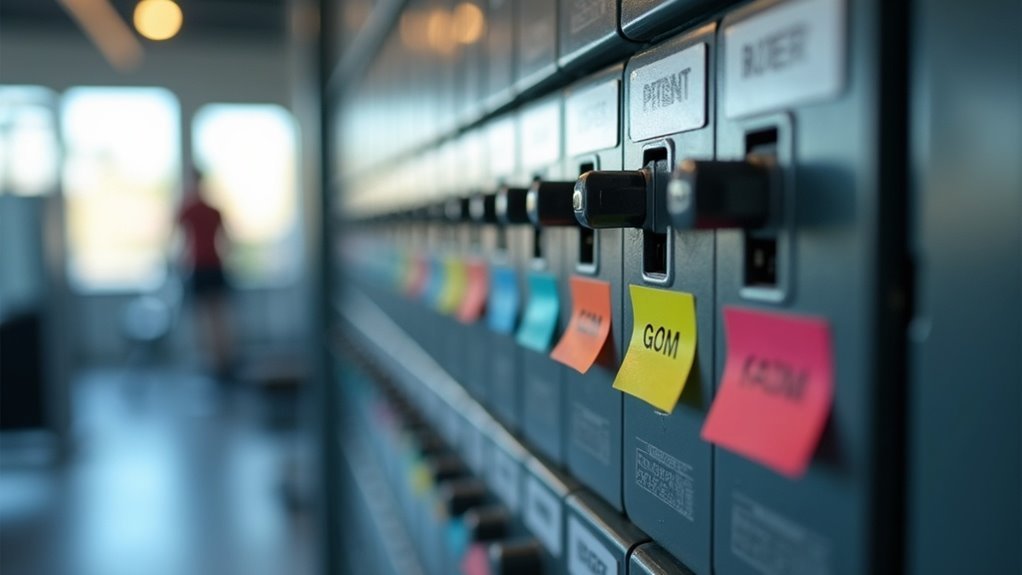
To effectively label circuit breakers for your home gym outlets, start by using a circuit breaker finder to pinpoint each outlet’s corresponding breaker. Create a detailed floor plan that documents the locations and functions of each outlet, ensuring you know which equipment is powered by which breaker. Use specific labels such as “Treadmill” or “Weight Machines,” crafted from durable materials for longevity. Ensure that your labels are visible and clear to avoid any confusion during workouts. Remember to regularly update the labels if you make any changes to your gym equipment. For more information on best practices and safety considerations, feel free to explore further resources.
Key Takeaways
- Create a comprehensive floor plan that marks outlet locations and the corresponding home gym equipment for effective circuit identification.
- Utilize a circuit breaker finder and electrical tester to determine which breaker controls each outlet in your home gym.
- Clearly label breakers with specific terms like “Treadmill” or “Strength Training Equipment” for easy identification and to facilitate a seamless workout experience.
- Regularly review and update labels to reflect any changes in your home gym setup or equipment configurations.
- Prioritize safety by using durable materials for labels, ensuring they are legible and visible, especially in a home environment where clarity is essential for safe exercising.
Importance of Labeling Circuit Breakers in a Gym
When you label circuit breakers in a home gym, you ensure quick identification of power sources for your various workout equipment, significantly enhancing safety during maintenance and emergencies.
Clearly labeled breakers reduce confusion for users and anyone assisting with electrical issues, making troubleshooting more efficient. Compliance with local building codes often requires proper labeling, ensuring safety standards are upheld in residential spaces.
Accurate labeling helps prevent hazards by designating circuits for high-demand equipment, minimizing the risk of overload. A well-organized circuit breaker panel supports better home gym management, allowing for quick power shut-offs during routine inspections or equipment repairs, ultimately protecting both your equipment and your workout environment.
Tools Needed for Identifying Circuit Breakers
Labeling circuit breakers accurately is crucial for ensuring your home gym operates smoothly and safely. To identify which breakers control specific outlets in your workout space, a circuit breaker finder is an essential tool that will help you pinpoint the corresponding breaker for each outlet.
Accurate labeling of circuit breakers is vital for the safe and efficient operation of your home gym.
When checking outlets, it’s wise to utilize an electrical tester or a plug-in light to verify which circuits are live, ensuring you have power where needed for your gym equipment.
For a more efficient process, consider using a two-person method: one person can flip the breakers while the other checks the outlets for power. This teamwork can significantly speed up the identification process.
Document your findings on a temporary chart to keep track of which circuit corresponds to which outlet, making it easier for future reference.
To enhance communication during this process, using smartphones or walkie-talkies can be beneficial, allowing you to accurately assign breaker labels to the right outlets without confusion. This way, you can ensure that your home gym isn’t only well-equipped but also set up safely and efficiently for your fitness journey.
Step-by-Step Process for Mapping Outlets
To start mapping outlets for your home gym setup, first, identify their locations on your floor plan. This will help ensure that your equipment is positioned conveniently and safely.
Next, test the circuit connections to determine which breaker controls each outlet, ensuring that you can power your gym equipment without any interruptions.
Finally, document your findings clearly to create a reliable reference for future equipment setups, allowing you to maintain an efficient and organized workout space at home.
Identify Outlet Locations
Mapping outlet locations is essential for effective circuit breaker labeling in your home gym setup. Follow these steps to ensure accuracy:
- Create a floor plan of your gym space, marking all outlet locations and the equipment that will be connected to them.
- Use an outlet tester or plug in a light to identify which outlets connect to which breakers—this is crucial for your home gym’s electrical safety.
- Record your findings in a chart, noting outlet locations and their corresponding breaker numbers.
After completing this mapping, label both the circuit breakers in the panel and the outlets clearly.
This consistency will facilitate quick identification, enhancing safety and efficiency in your home gym environment. Properly identified outlets will streamline troubleshooting and maintenance, allowing you to focus on your health and fitness goals without interruption.
Test Circuit Connections
How can you ensure accurate circuit connections in your home gym? Start by turning off one breaker at a time.
Use an electrical tester or plug in a light to each outlet to confirm which breaker controls it. Make a note of the status—live or not—when you switch off the breaker.
If you have a workout partner, coordinate; one person should be at the breaker panel while the other tests the outlets.
After mapping all outlets, cross-reference your findings with existing panel labels and check for any unmarked breakers that may need further investigation.
This meticulous approach guarantees the correct labeling of circuits and outlets, ensuring a safe and efficient workout environment for your home gym.
Document Findings Clearly
Accurate documentation of your home gym outlet findings is essential for effective circuit mapping. To streamline the process for your workout space, follow these steps:
- Identify each outlet using an outlet tester or plug-in light to ensure safety while exercising.
- Create a chart that reflects your home gym layout, noting outlet locations and corresponding breaker numbers for easy reference.
- Systematically document your findings, testing each outlet multiple times and confirming with existing panel labels to ensure reliable power supply for your gym equipment.
Best Practices for Labeling Circuit Breakers
When labeling circuit breakers for your home gym, utilizing a label maker or printable templates ensures clear and legible identification.
Begin with the highest amperage breakers for essential home gym equipment, such as treadmills and ellipticals, which typically require 20-30 amp circuits. Document specific outlets and equipment each breaker controls, labeling them with terms like “Treadmill” or “Weight Machines” for easy reference during maintenance or emergencies.
Start by identifying the highest amperage breakers for key gym equipment, labeling them clearly for safety and convenience.
Conduct a thorough room-by-room mapping of gym outlets to confirm accurate breaker assignments, ensuring you check for shared circuits. Regularly review and update the labels, particularly after any changes in equipment, to maintain compliance with local building codes and safety protocols.
This practice not only enhances safety but also contributes to a more organized and efficient home workout environment.
Maintaining and Updating Your Circuit Labels
To maintain safety and efficiency in your home gym, regularly updating your circuit labels is essential. Follow these steps for effective maintenance:
- Review and update circuit breaker labels annually or after any electrical work to ensure they accurately reflect your gym’s setup.
- Replace any faded or damaged labels promptly to maintain clear circuit identification, which is crucial for safety during workouts.
- Document any changes to your electrical system, such as the addition of new gym equipment, to keep your labeling relevant and up-to-date.
Additionally, keep a backup copy of your circuit map for easy reference and regularly test each circuit to verify functionality.
This ensures that the labeling aligns correctly with the outlets and devices powering your home gym equipment, helping you focus on your fitness goals without interruption.
Safety Considerations When Labeling Gym Outlets
Labeling home gym outlets effectively is crucial for ensuring safety, especially in areas where electrical equipment is frequently used.
Use waterproof labels to prevent wear from moisture and sweat, which can obscure critical information. Specifically mark GFCI outlets, as these are essential for shock prevention in wet environments often encountered in home gyms.
Regular inspection and updating of outlet labels are necessary to maintain legibility and compliance with safety standards. Document the specific equipment connected to each outlet on the label or in a maintenance log, ensuring clarity for future troubleshooting and protecting against accidental disconnections during repairs.
Prioritize safety in your labeling process to create a secure workout environment at home.