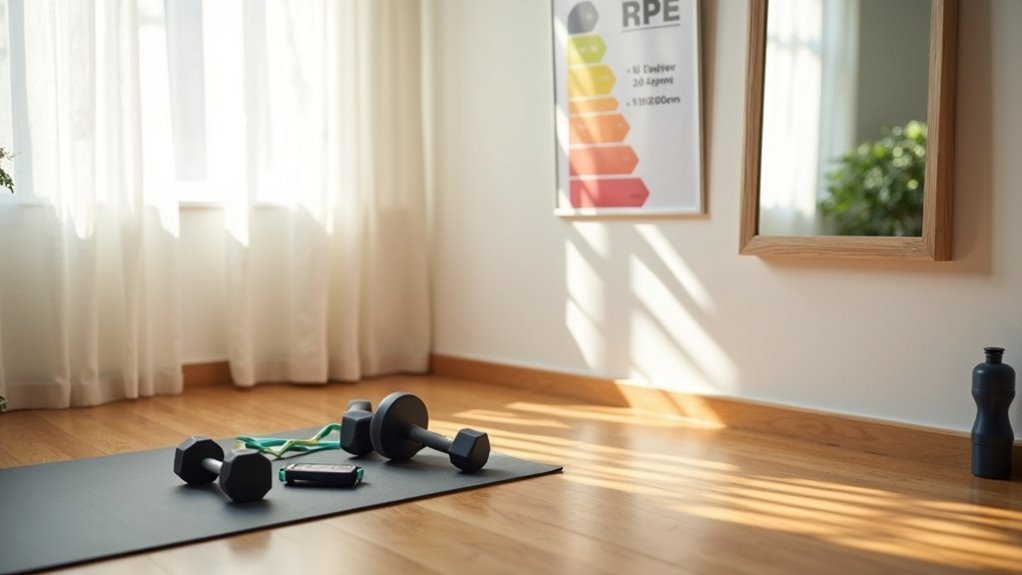
To effectively use the RPE scale for your home training, begin with a warm-up at an RPE of 6 to enhance your technique. For compound exercises, strive for an RPE of 8-9, ensuring you leave one or two reps in reserve for safety and effectiveness. For accessory movements, adjust your intensity to an RPE of 7-8. It’s crucial to listen to your body each day; if you’re feeling fatigued, consider dialing back to an RPE of 6-7 to avoid overtraining. Keeping track of your RPE scores can provide valuable insights into your performance trends and help you optimize your home workouts. Explore more tips on maximizing your training while staying healthy!
Key Takeaways
- Begin your workout with warm-up sets at an RPE of 6 to perfect your form before progressing to heavier lifts. This will help you prevent injuries and maximize your performance.
- Focus on compound exercises, aiming for an RPE of 8-9, and leave 1-2 reps in reserve for optimal intensity. This approach will help you build strength efficiently with the home gym equipment you have.
- For accessory movements, maintain an RPE of 7-8 to keep your workouts engaging and effective. This balance will ensure you target all muscle groups without overexertion.
- Consistently track your RPE scores after each set to adjust weights and repetitions according to how you feel on that particular day. This will help you maintain a sustainable and enjoyable workout routine.
- Periodically review your RPE logs to identify patterns and set realistic training goals. This practice will ensure your workouts align with your energy levels and preferences, allowing you to stay healthy and motivated while exercising at home.
Understanding the RPE Scale
The RPE scale is an invaluable tool for enhancing your home workout experience. By utilizing the rate of perceived exertion, you can effectively gauge your training intensity on a scale from 1 to 10, right from the comfort of your own space.
An RPE of 10 indicates you’ve pushed yourself to your absolute limit, while a score of 6 or higher is essential for effective training and muscle growth. Grasping this scale allows you to understand your repetitions in reserve—meaning that an RPE of 9 suggests you have one rep left in you.
Regularly recording your RPE values not only tracks your training progress but also ensures that your home workouts align with your fitness goals, optimizing your results and keeping you motivated on your path to staying healthy.
Implementing RPE in Home Workouts
While you’re exercising at home, incorporating the RPE scale can significantly enhance your workout results. Here’s how you can effectively use it:
Incorporating the RPE scale at home can greatly improve your workout effectiveness.
- Begin with warm-up sets at an RPE of 6 to refine your technique and ensure proper form.
- During compound exercises, aim for an RPE of 8-9, leaving 1-2 reps in reserve to maintain intensity without overexerting yourself.
- For accessory movements, target an RPE of 7-8 to keep the intensity up while avoiding excessive fatigue.
Make sure to track your RPE after each set so you can adjust weights or repetitions in real-time. This strategy helps you challenge yourself appropriately while reducing the risk of injury.
Adjusting Intensity Based on Daily Feelings
Adjusting the intensity of your home workouts based on how you feel each day can greatly enhance your fitness results.
Utilize the RPE (Rate of Perceived Exertion) scale to assess your daily effort, aiming for levels of 6-8 to foster muscle growth while avoiding overtraining. If you’re feeling fatigued, dial back the intensity to a 6-7 to maintain good form and support recovery.
Keep track of your RPE scores during your home training sessions to identify patterns influenced by factors like sleep, nutrition, and stress.
Incorporating RPE into your warm-up sets allows you to adjust weights effectively, ensuring your main sets match your perceived exertion for optimal outcomes in your home gym routine.
Benefits of Using RPE for Training at Home
Utilizing the RPE scale for your home workouts offers numerous advantages that can elevate your training experience right from your living room. By focusing on perceived exertion, you can customize your sessions to match your energy levels, ensuring they remain effective and enjoyable.
Harness the RPE scale to tailor your home workouts, enhancing effectiveness and enjoyment while aligning with your energy levels.
Here are some key benefits of using RPE:
- Improved Safety: By tuning into your body’s signals, you can avoid overtraining and adjust the workout intensity to suit your current state, minimizing the risk of injury.
- Enhanced Accountability: RPE promotes self-awareness, empowering you to recognize and respect your physical limits, which is crucial when working out at home without supervision.
- Simplified Planning: You can bypass the hassle of calculating weights and percentages, making it straightforward and accessible for any home workout setup, whether you’re using dumbbells, resistance bands, or bodyweight exercises.
Embrace the RPE scale to boost your training intensity with confidence and achieve your fitness goals from the comfort of your home!
Tips for Tracking Progress With RPE
Tracking your progress with the RPE scale can be a game-changer for your home workouts, as it allows you to measure your effort and adjust your training effectively.
Use the 0-10 RPE scale to rate your perceived exertion after each set, creating a log that reveals patterns in your training intensity. This method is especially beneficial for men and women looking to optimize their home gym routines.
Compare your scores over time to identify improvements, and note external factors like sleep quality and nutrition that may influence your performance.
Regularly review your logs to set realistic training goals and make informed adjustments, ensuring your frequency of training aligns with your desired outcomes.
Stay consistent, and you’ll see significant progress in your fitness journey!