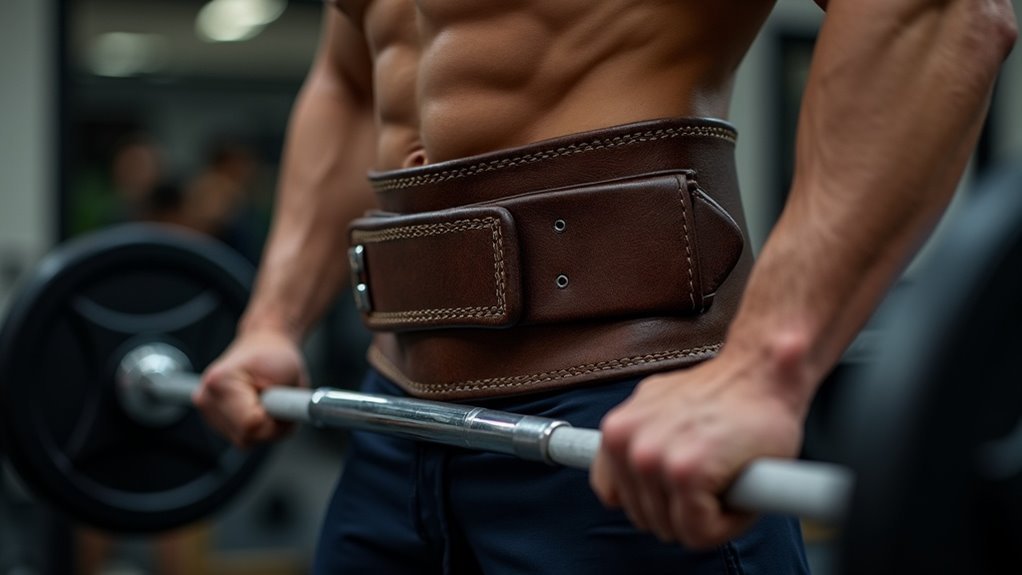
To use lifting belts correctly in your home gym, position the belt just above your hip bone and ensure it’s snug, allowing for two fingers to fit comfortably between it and your body. Engage your core by taking a deep breath and pushing your stomach against the belt. Reserve the belt for heavy lifts, specifically when you’re lifting around 80% of your one-rep max, while focusing on developing core strength with lighter weights. By incorporating these techniques, you can enhance your workouts and stay healthy while exercising at home. Keep practicing, and you’ll discover even more tips to maximize your lifting routine!
Key Takeaways
- Position the belt just above your hip bone to ensure full torso contact and provide optimal support during your home workouts.
- Make sure the belt is snug, allowing for two fingers to fit comfortably between the belt and your body for effective support without restricting movement.
- Use the belt during heavier lifts, particularly for compound exercises, when you’re lifting at 80% or more of your one-rep max to enhance your performance safely.
- Engage your core by taking a deep breath and expanding your stomach against the belt before you lift, helping to stabilize your body.
- Avoid depending on the belt for every set; instead, focus on building core strength with lighter weights to enhance your overall fitness at home.
Understanding the Purpose of Lifting Belts
When you’re lifting heavy weights at home, understanding the purpose of a lifting belt can significantly enhance your performance and safety.
A lifting belt increases intra-abdominal pressure, stabilizing your core strength and providing better control during lifts. It acts as an external cue to engage your core effectively, reinforcing proper breathing techniques.
Research indicates that wearing a belt can boost intra-abdominal pressure by 20-40%, potentially improving your lifting capacity. Furthermore, it offers support for your lower back, helping you maintain proper form and reducing the risk of injury.
Use it correctly, and it can elevate your home gym workouts to the next level.
Choosing the Right Type of Belt
How can you ensure you’re choosing the perfect lifting belt for your home gym needs? Start by considering the thickness—options typically range from 10 mm to 13 mm, with thicker belts providing more support, which can be beneficial for heavy lifts, though they may be less comfortable.
Aim for a belt that’s 4 inches wide all around to offer ideal core stability during your workouts. If convenience is a priority, a single prong belt might be the most user-friendly option, while lever belts allow for quick adjustments and secure fastening, which is especially important during intense training sessions.
To enhance your home exercise experience, prioritize quality and durability by selecting trusted brands like Inzer, Pioneer, and Rogue, which can help you effectively boost your lifting performance.
Measuring for the Correct Size
Getting the right size for your lifting belt is crucial for enhancing support and comfort during your home workouts.
To ensure you choose the correct size, use a measuring tape to measure around your waist at the navel area, where the belt will sit. It’s important to base your measurement on your actual waist size rather than your pant size to guarantee a snug fit.
Keep the tape level and allow for some slight movement. Also, consider the thickness of the belt; a 4-inch wide option is generally recommended for optimal support.
Always consult the specific brand’s sizing chart, and make sure you can fit two fingers comfortably between the belt and your trunk when it’s snug. This will help you achieve the best results while working out at home.
Proper Placement and Tightness
For optimal performance and safety while exercising at home, it’s crucial to position your lifting belt correctly.
Place the belt just above your hip bone, ensuring it fully contacts your torso for excellent support.
To achieve the right tightness, fit two fingers comfortably between the belt and your body when braced, allowing for abdominal expansion.
Fit two fingers comfortably between the belt and your body to ensure proper tightness and allow for abdominal expansion.
The belt should feel snug but not overly restrictive, enabling strong intra-abdominal pressure without causing discomfort.
Engage your core by taking a deep breath and expanding your stomach against the belt.
Practice with lighter weights to refine your lifting technique and become accustomed to the belt’s support, helping you stay healthy and strong while working out in your home gym.
Techniques for Using a Belt Effectively
To use your lifting belt effectively during home workouts, start by positioning it just above your hip bone for optimal support.
Engage your core by “breathing into the belt,” which creates intra-abdominal pressure that enhances stability during your lifts.
Proper Belt Placement
Achieving the right placement of your lifting belt is essential for maximizing support and performance during your home workouts.
Position the weightlifting belt just above your hip bone for full contact across your torso, ensuring it provides the necessary support during your exercises. Make sure it’s tight enough to allow stomach expansion during effective bracing, ideally fitting an index finger down the back.
Practice breathing “into the belt” to create intra-abdominal pressure, enhancing stability during your lifts. Remember, proper belt placement may vary based on your body structure and preferences, so adjust accordingly to find what works best for you.
This ideal fit will empower your core and trunk muscles, providing the necessary support for your home gym workouts, whether you’re lifting weights or doing bodyweight exercises.
Engaging Core Muscles
While using a lifting belt can enhance your performance, effectively engaging your core muscles is crucial for maximizing its benefits, especially when working out at home.
To do this, imagine getting punched in the gut to trigger a bracing response that boosts your stability during lifts. When you take a deep breath, expand your stomach against the belt, increasing intra-abdominal pressure to support your spine.
Ensure the belt fits snugly above your hip bones for full torso contact. Start by practicing with lighter weights to master your bracing techniques before progressing to heavier lifts.
Keep in mind that a lifting belt isn’t a substitute for core strength; it complements your home workout efforts and helps you stay healthy while exercising at home.
When to Wear Your Lifting Belt
Wearing a lifting belt can be a valuable addition to your home workout routine, especially during heavy lifts with compound exercises like squats and deadlifts.
If you’re pushing your limits at home, a belt offers the support needed to maintain proper form and reduce the risk of injury.
However, it’s important to use a belt strategically, rather than relying on it for every lift, to ensure that you continue to build your core strength effectively while working out in the comfort of your home.
Heavy Lifts Only
When you’re tackling heavy lifts at home, using a lifting belt can greatly enhance your performance and safety.
To maximize your benefits, consider these key points:
- Wear a belt during heavy compound exercises like squats and deadlifts, which can be performed with home gym equipment.
- Apply the belt for your heaviest working sets, typically at 80% or more of your one-rep max, to ensure proper support.
- Focus on developing core strength with lighter lifts below 70% max effort to build a solid foundation for heavy lifting.
- Avoid using a belt for accessory exercises, as it’s meant specifically for heavy efforts to maintain proper form and reduce injury risk.
Compound Exercises Recommended
Lifting belts are an important tool for those engaging in compound exercises at home that require high levels of stability and core support.
When performing heavy weights in squats and deadlifts—especially when lifting loads exceeding 80% of your one-rep max—it’s crucial to use a lifting belt. This can enhance core stability, helping you maintain proper form and protect your back.
As you embark on your strength training journey at home, focus on building foundational strength without a belt initially, particularly if you’re a beginner.
It’s beneficial to incorporate both belted and beltless variations in your routine to ensure balanced core development.
Keep in mind that accessory exercises typically don’t require a belt; instead, prioritize core stability through controlled movements for effective home workouts.
Skill Level Considerations
As you embark on your strength training journey at home, understanding when to wear a lifting belt can enhance both your performance and safety.
- Consider wearing a belt during heavy compound lifts, typically when you’re lifting 70-80% of your maximum.
- Prioritize developing your core strength and mastering bracing techniques without relying on a belt.
- Use a lifting belt primarily during your heaviest sets to provide extra support.
- If you’re a serious lifter aiming for personal records or competitions, it’s advisable to wear a belt for all working sets to ensure maximum stability and safety.
Stay committed to your fitness goals and enjoy the benefits of working out in your home gym!
Common Mistakes to Avoid
While using a lifting belt can greatly enhance your home workout performance, several common mistakes can undermine its benefits.
First, ensure your belt is snug; a good rule of thumb is to fit two fingers between the belt and your body when braced.
Additionally, don’t rely on the belt for every set—reserve it for loads above 70-80% of your one-rep max to maintain core strength and stability.
Adjust the belt’s position based on the exercise, and visualize “getting punched in the gut” to effectively engage your muscles.
Maintenance and Break-In Tips for Your Belt
Using a lifting belt effectively is crucial for maximizing your home workout experience, and proper maintenance and break-in techniques can significantly enhance its performance.
To ensure your belt remains functional and comfortable, follow these tips:
Ensure your lifting belt stays functional and comfortable by following these essential maintenance tips.
- Roll and unroll your new heavy-duty powerlifting belt to soften the material, making it more pliable for your workouts.
- Handle it regularly; the warmth from your hands can help loosen the belt over time, allowing for a better fit.
- Store your belt flat when not in use to maintain its shape and integrity, ensuring it’s always ready for your next session.
- Consistently use the belt during your home workouts, and regularly check the buckle and stitching for any signs of wear.